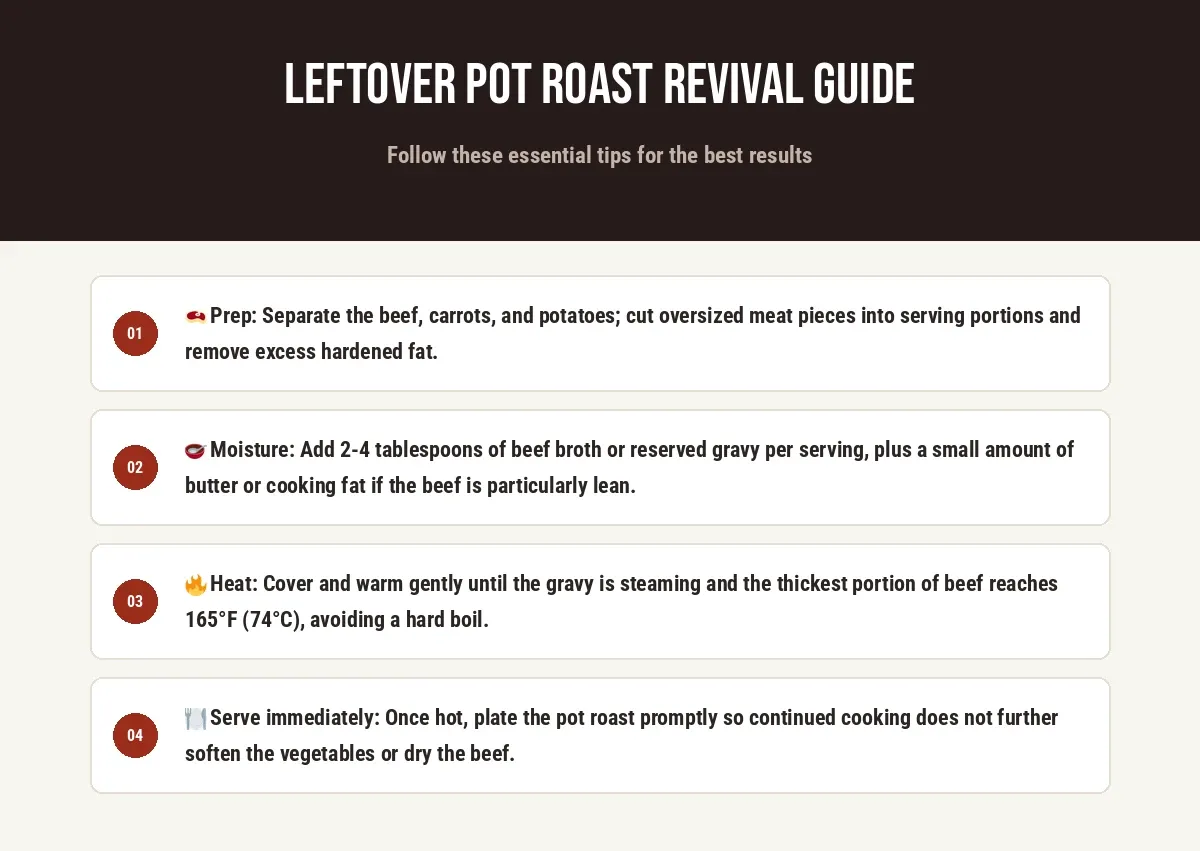
Leftover pot roast can be better the next day, but only if you reheat it gently. The beef, carrots, and potatoes have already been cooked once, so the goal is not to cook them again. It is to warm them through while keeping the meat moist and the vegetables intact. The most reliable approach is to separate large pieces, add a small amount of flavorful liquid, cover the food, and heat it slowly.
Why Leftover Pot Roast Loses Its Texture?
Pot roast loses its original texture mainly because reheating pushes more moisture out of the beef. During the first cooking, collagen in tough beef gradually converts into gelatin, making the meat tender. After refrigeration, the gelatin firms up and the meat’s juices redistribute. If the roast is reheated too aggressively, muscle fibers contract and squeeze out additional moisture. The result is meat that feels dry, stringy, or tougher even though it started out tender.
The sauce also changes in the refrigerator. Fat solidifies, gelatin sets, and the liquid becomes thicker. That chilled structure is useful for storage but needs gentle reheating to return to a spoonable consistency. Potatoes can become dense or mealy after chilling, while carrots soften further if they are exposed to prolonged high heat. For that reason, the best revival method uses moderate heat, added moisture, and a covered cooking environment.
Step-by-Step Revival: A 3-step Guide
Step 1: Prep
Take the pot roast from the refrigerator and separate the beef from the carrots and potatoes if they are stored together. Cut very large beef pieces into smaller serving-size portions, but do not shred the meat unless you specifically want shredded beef. Remove any large pieces of hardened surface fat. Keep the vegetables in pieces large enough to hold their shape.
Place the beef in a shallow, heat-safe pan or saucepan so the pieces sit in a relatively even layer. Arrange the carrots and potatoes around the meat rather than burying them underneath it. This lets the heat reach everything evenly and reduces the amount of time the vegetables spend cooking.
Step 2: Moisture
Add beef broth or the reserved pot-roast gravy to the pan. Use roughly 2-4 tablespoons per individual serving, adding more only if the pan looks dry. The liquid should moisten the bottom of the pan rather than completely submerge the meat. If the original gravy has become very thick, loosen it with a little unsalted or low-sodium beef broth.
For especially lean pieces of beef, add a small amount of the reserved cooking fat or a teaspoon of butter to the gravy. Cover the pan tightly with a lid or foil. The enclosed moisture creates gentle steam, while the broth or gravy keeps the exposed meat from drying out.
Step 3: Heat
For the most consistent result, reheat pot roast covered over low to medium-low heat on the stovetop. Warm it gradually until the gravy is steaming and the center of the beef is hot. Turn or reposition thick pieces once during heating. The beef should feel tender when pressed with a fork, while the potatoes and carrots should be hot but still hold their shape. Avoid boiling the gravy hard; vigorous bubbling can make the meat tighten and the vegetables break apart.
For larger portions, a covered oven at 300°F (150°C) works well. Add broth or gravy, cover tightly, and heat until the center is thoroughly hot. A food thermometer is the most reliable way to check temperature; leftovers should reach 165°F (74°C) when reheated.
| Reheating method | Cooking time | Temperature / setting | Instructions by portion |
|---|---|---|---|
| Stovetop, covered | 10-20 min | Low to medium-low | 1 serving: use a small saucepan; 2-4 servings: use a wide covered pan. Add 2-4 tbsp broth or gravy per serving and turn thick beef pieces once. |
| Oven, covered | 20-35 min | 300°F / 150°C | 1-2 servings: use a small covered baking dish; 4+ servings: use a larger shallow dish. Add enough gravy or broth to cover the bottom and seal tightly with a lid or foil. |
| Microwave, covered | 3-7 min | 50-70% power | 1 serving: place meat and vegetables in a microwave-safe dish with gravy, cover loosely, and heat in 60-90-second intervals. For multiple servings, divide into separate portions for more even heating. |
| Slow cooker | 1-2 hr | Low | Best for 4+ servings. Add gravy or broth, cover, and heat until thoroughly hot. Avoid leaving leftovers warming for extended periods once they are hot. |
3 Simple Culinary Ideas To Repurpose Leftover Pot Roast
Warming Thick Beef Chunks With Carrots And Potatoes
Cut the beef into thick bite-size pieces and combine it with the leftover carrots and potatoes in a skillet. Add a splash of beef broth and several spoonfuls of gravy, cover, and warm gently. Finish with chopped parsley or a little black pepper. Keep the pieces substantial so the dish feels like a fresh meal rather than reheated leftovers.
Pot Roast Gravy Bowls
Shred or finely chop the beef and warm it in its gravy with a splash of beef broth. Spoon it over freshly cooked rice, mashed potatoes, or another plain grain that can absorb the sauce. Add the leftover carrots near the end so they warm without becoming overly soft. This uses the concentrated gravy as the main source of flavor and turns a small amount of meat into several portions.
Toasted Pot Roast Sandwiches
Slice the cold beef thinly and warm it briefly in a little gravy. Pile it onto toasted bread with some of the leftover carrots, then spoon a small amount of gravy over the filling. Keep the bread toasted and the gravy controlled so the sandwich stays crisp instead of becoming soggy. If the potatoes remain, mash them and use them as a side rather than forcing every leftover component into the sandwich.
Food Safety
-
Cool promptly: Divide a large quantity of pot roast into shallow containers so it cools quickly. Refrigerate cooked leftovers within 2 hours of cooking or serving, or within 1 hour if the surrounding temperature is above 90°F (32°C). Do not leave a large pot sitting at room temperature to cool for an extended period.
-
Store airtight: Transfer beef, vegetables, and gravy to clean airtight containers or tightly covered storage dishes. Keeping the meat with some gravy helps prevent surface drying and limits exposure to air. Label containers with the date so their storage time is easy to track.
-
Use within safe fridge time: Keep the refrigerator at 40°F (4°C) or below and use refrigerated cooked pot roast within 3-4 days. Reheat only the portion you plan to eat. If leftovers have been refrigerated longer than that, discard them rather than relying on smell or appearance to determine safety.