How to Reheat Leftover Meatloaf Without Losing Moisture
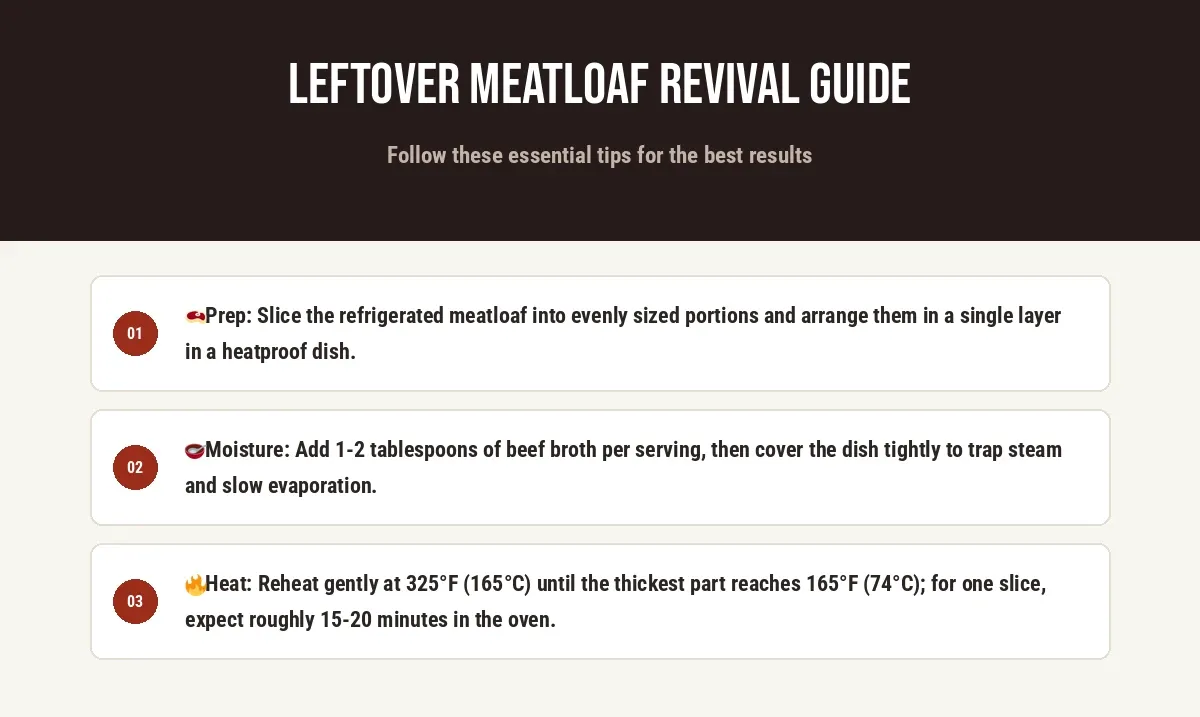
Leftover meatloaf is easy to save, but reheating it the wrong way can turn a tender slice into something dry, dense, and crumbly. The goal is not simply to make the meatloaf hot again. It is to replace some of the moisture lost during storage, limit further moisture loss during reheating, and warm the center without overheating the exterior. A gentle, covered reheating method works better than blasting the meatloaf with high heat.
You can also repurpose meatloaf instead of reheating it as a whole slice. Crumbled meatloaf works in sandwiches, pasta sauces, rice bowls, and other dishes where its seasoned flavor becomes an ingredient rather than something that needs to retain its original shape.
Why Leftover Meatloaf Loses Its Texture?
Meatloaf loses tenderness mainly because its proteins tighten and squeeze out moisture during cooking, then continue to lose moisture during cooling, refrigeration, and reheating. The ground meat contains water, fat, and proteins bound together in a structured mixture. During the original bake, heat causes muscle proteins to contract. If leftover meatloaf is exposed to high heat again, those proteins contract further, pushing out more moisture and producing a firmer, drier texture.
Refrigeration also changes the way the meatloaf feels. As it cools, the rendered fat firms up and the meat matrix becomes more rigid. The surface can dry out through evaporation, particularly when the meatloaf is stored uncovered or loosely wrapped. Reheating an uncovered slice in a dry environment accelerates that moisture loss.
The thickness of the slice matters too. A thick piece needs enough time for its center to warm, but leaving it in the heat long enough to warm the middle can overcook the outside. Gentle heat, added moisture, and a covered cooking environment solve that problem by reducing evaporation while allowing the center to heat gradually.
Step-by-Step Revival: A 3-step Guide
Step 1: Prep
Slice the refrigerated meatloaf into portions of similar thickness before heating. If the meatloaf is already sliced, keep the slices together rather than breaking them apart unnecessarily; the intact surface helps retain moisture. Remove any very dry or heavily browned edges only if they are unpleasantly tough.
Place the slices in a single layer in a heatproof dish. Leave a little space between portions so heat can circulate. If the meatloaf has a sauce or glaze, scrape any remaining sauce over the top rather than discarding it. A thin layer of sauce provides both flavor and additional surface moisture.
Step 2: Moisture
Add 1-2 tablespoons of beef broth per serving to the bottom of the dish. The broth should sit around the meatloaf rather than soak the top completely. For a richer result, add a small amount of gravy or tomato-based sauce instead. Cover the dish tightly with foil or a lid to trap steam.
The combination of broth and a covered dish is more useful than simply pouring liquid directly over a dry slice. The broth supplies moisture while the cover limits evaporation. Avoid adding a large amount of liquid, which can make the exterior soft and dilute the seasoning.
Step 3: Heat
The most reliable method is a covered oven reheating at 325°F (165°C). Heat until the center reaches 165°F (74°C), checking the thickest portion with an instant-read thermometer. For a typical 1-inch slice, this usually takes about 15-20 minutes; thicker portions may need longer. Remove the cover for the final minute or two if you want the glaze or surface to become slightly firmer.
The meatloaf should feel hot and tender in the center rather than hard or rubbery around the edges. If the center has reached a safe temperature but the exterior feels dry, stop heating rather than extending the cooking time. Carryover heat will continue warming the portion briefly after it leaves the oven.
| Reheating method | Setting | Approx. time | Best for | Instructions |
|---|---|---|---|---|
| Oven | 325°F / 165°C | 15-20 min for 1-inch slices; 25-35 min for thicker portions | 2-6 servings | Place meatloaf in a covered dish with 1-2 tbsp broth per serving. Heat until the center reaches 165°F / 74°C. |
| Microwave | 50-70% power | 1½-3 min per slice | 1-2 servings | Add 1 tbsp broth to the dish, cover loosely, and heat in 30-45 second intervals. Turn or reposition between intervals and stop when the center reaches 165°F / 74°C. |
| Skillet | Low heat | 8-12 min per slice | 1-3 servings | Add a small splash of broth, place the meatloaf in the skillet, cover, and heat gently. Turn once if the slices are sturdy. |
| Air fryer | 300°F / 150°C | 6-10 min per slice | 1-2 servings | Wrap the slice loosely in foil with a spoonful of broth or sauce. Heat until the center reaches 165°F / 74°C, then uncover briefly if a firmer surface is desired. |
3 Simple Culinary Ideas To Repurpose Leftover Meatloaf
Meatloaf Sandwich
Turn cold or gently reheated meatloaf into a substantial sandwich. Warm the slice with a little gravy or broth, then place it on toasted bread with lettuce, tomato, pickles, or a simple mustard-based sauce. For a softer sandwich, crumble the meatloaf and warm it directly in a small skillet with a spoonful of tomato sauce before adding it to the bread.
Meatloaf Pasta Sauce
Crumble the meatloaf into small pieces and warm it in a saucepan with tomato sauce. The existing seasoning means you need little additional seasoning. Simmer gently until the meatloaf is hot throughout, then toss with cooked pasta. This is particularly useful for slices that have become too dry to enjoy on their own because the sauce supplies the moisture the meatloaf has lost.
Meatloaf Hash
Dice the meatloaf and cook it with potatoes and vegetables in a skillet. Start with cooked potatoes so the meatloaf does not need prolonged heating. Add the meatloaf near the end, along with a splash of broth, and cook just until everything is hot. This gives dry or misshapen leftovers a new texture without requiring you to restore the original slice.
Restoring Moisture To Dense Or Dry Meatloaf Slices
For meatloaf that is already noticeably dry, use moisture in layers rather than flooding it. Put the slice in a covered baking dish, add 1-2 tablespoons of beef broth per serving, and spoon a thin coating of gravy, barbecue sauce, or tomato sauce over the surface. Heat at 325°F (165°C) until the center reaches 165°F (74°C).
If the meatloaf is extremely dense, crumble it instead of trying to restore the texture of a whole slice. Warm the crumbles gently in gravy, tomato sauce, or a small amount of broth. The increased surface area allows the added moisture to distribute more evenly, and the sauce prevents the meat from becoming progressively drier during reheating.
Food Safety
-
Cooling time: Refrigerate cooked meatloaf within 2 hours of cooking or serving, or within 1 hour if the surrounding temperature is above 90°F (32°C). Divide a large quantity into shallow containers so it cools more quickly rather than leaving a large hot mass at room temperature.
-
Airtight storage: Store meatloaf in an airtight container or wrap it tightly with suitable food-storage material. Keep the refrigerator at 40°F (4°C) or below. Airtight storage limits moisture loss, protects the food from refrigerator odors, and reduces surface drying.
-
Safe fridge days: Use refrigerated cooked meatloaf within 3-4 days. Reheat leftovers to 165°F (74°C) in the center. If you will not use the meatloaf within that period, freeze it promptly rather than extending its refrigerator storage.