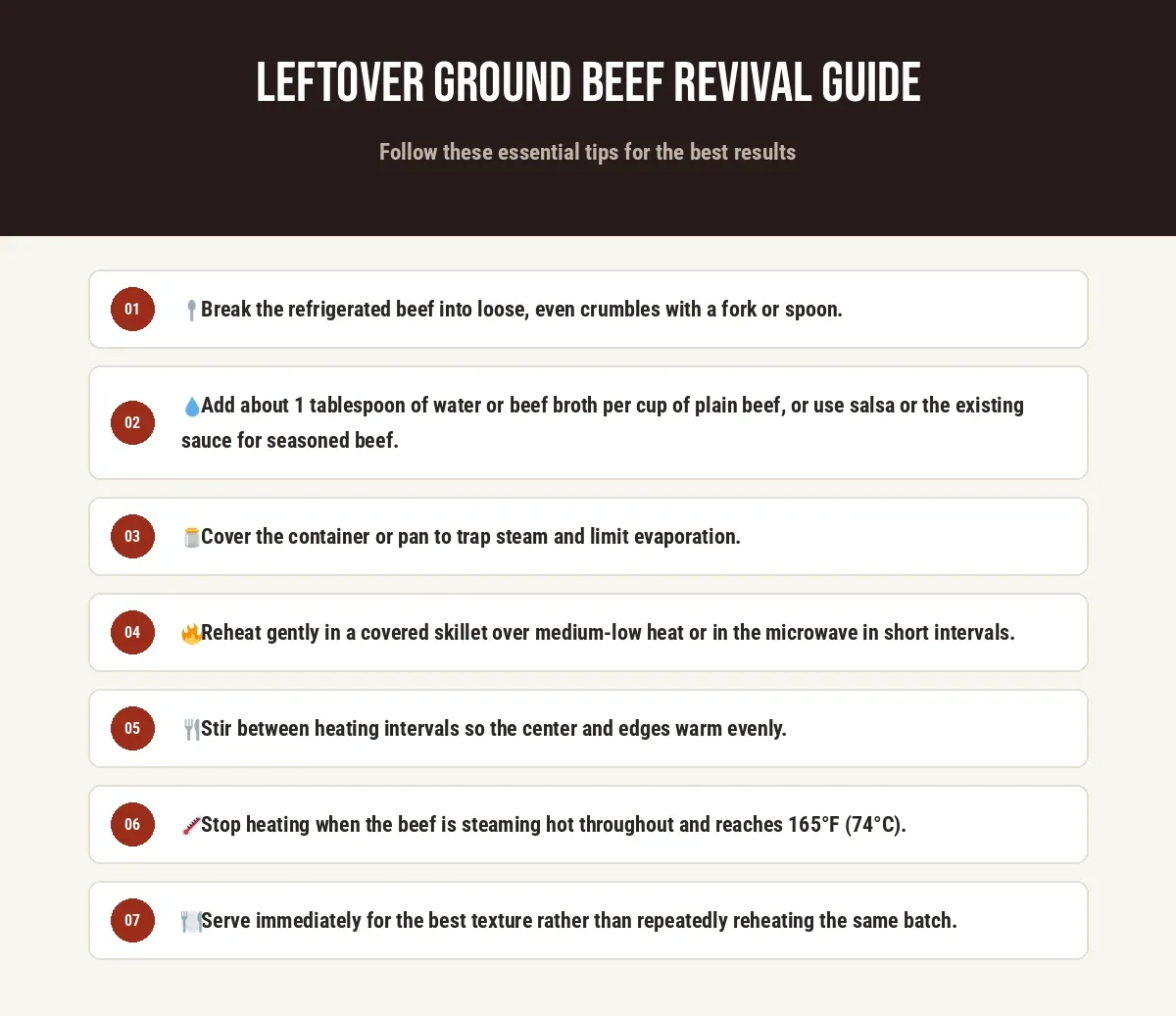
Leftover ground beef is easy to save and surprisingly easy to ruin. The main mistake is reheating it until it is simply hot, which can drive out more moisture than the first cooking did. The fix is straightforward: loosen the beef before heating, add a small amount of moisture, then warm it quickly and gently. The goal is not to cook the beef again. It is to bring it back to serving temperature while minimizing additional moisture loss.
Why Leftover Ground Beef Loses Its Texture?
Ground beef loses its original texture mainly because reheating pushes more water out of the cooked meat. During the first cooking, heat causes muscle proteins to contract and squeeze out some of the water held within the meat. After refrigeration, the beef is already relatively firm and dry. A second exposure to high heat causes further protein contraction and evaporation, leaving the crumbles tougher, drier, and sometimes slightly rubbery.
Ground beef also has a large surface area because it is finely minced. More exposed surface means more opportunity for moisture to evaporate during reheating. If the beef contains rendered fat, some of that fat can separate as it heats, making the meat feel greasy on the outside while remaining dry inside. Refrigeration can make the fat firm and cause the crumbles to stick together, so simply throwing a cold block into a hot pan often produces uneven heating and excessive browning.
The best revival method therefore combines gentle heat with a small amount of liquid or fat. The added moisture creates steam around the meat, while a covered pan or microwave traps that moisture instead of allowing it to escape.
Step-by-Step Revival: A 3-step Guide
Step 1: Prep
Take the beef from the refrigerator and break apart any compacted pieces with a fork or wooden spoon. Separate large clumps into loose crumbles so the heat can reach the center without overheating the outside. If the beef is mixed with a sauce, stir it thoroughly before heating. For very lean or particularly dry beef, spread it into a relatively thin layer rather than piling it into one dense mass.
Do not rinse the beef or add a large amount of liquid at this stage. You want to loosen the meat while keeping its existing seasoning and flavor concentrated.
Step 2: Moisture
For plain leftover ground beef, add about 1 tablespoon of water, unsalted beef broth, or low-sodium beef broth per cup of meat. Beef broth gives the most direct savory result, while water restores moisture without changing the flavor. For beef intended for tacos, chili, or tomato-based dishes, use 1 to 2 tablespoons of the dish’s existing sauce or salsa per cup of meat when appropriate.
A teaspoon of butter or olive oil can also help dry, lean beef feel more supple, but fat should supplement moisture rather than replace it. Cover the pan or microwave-safe container after adding the liquid. Trapped steam is important because it keeps the surface from drying while the center warms.
Step 3: Heat
For the most even revival, use a covered skillet over medium-low heat. Stir every 30 to 60 seconds, scraping the bottom and redistributing the beef and liquid. Heat only until the beef is steaming hot throughout and reaches 165°F (74°C) when checked with a food thermometer. It should feel moist and loose rather than stiff, and there should be a small amount of absorbed or lightly coating liquid rather than a pool of broth.
A microwave works well for small portions. Cover the container loosely, heat in short intervals, and stir between intervals so hot spots do not overcook some crumbles while the center remains cold. Avoid high heat and prolonged reheating; once the beef reaches 165°F, stop heating rather than continuing to brown it.
| Reheating method | Typical time | Setting | 1 serving | 2-4 servings | Best instructions |
|---|---|---|---|---|---|
| Covered skillet | 3-6 min | Medium-low | 1 tbsp liquid per cup beef | Add liquid proportionally; use a wider pan | Stir frequently until steaming hot and 165°F throughout |
| Microwave | 1-3 min | Medium-high, about 70-80% power | Heat 30-45 sec at a time | Heat 45-60 sec at a time | Cover loosely, stir between intervals, and stop at 165°F |
| Covered saucepan | 4-7 min | Low | Add 1 tbsp liquid per cup | Use enough pan surface for an even layer | Stir frequently; useful for saucy taco meat or chili |
| Oven | 10-15 min | 300°F (150°C) | Place in a small covered dish | Spread in a shallow covered baking dish | Add liquid, cover tightly, and heat until 165°F; best for larger batches |
3 Simple Culinary Ideas To Repurpose Leftover Ground Beef
Loaded Baked Potatoes
Split a baked potato and fill it with reheated ground beef, then add shredded cheese, plain yogurt or sour cream, chopped green onions, and salsa. Add a spoonful of broth or salsa to the beef while reheating so it stays moist enough to complement the potato. This works especially well with plain beef that needs a fresh flavor boost.
Quick Beef Quesadillas
Combine the leftover beef with a small amount of salsa, place it between tortillas with cheese, and cook the quesadilla in a dry or lightly greased skillet until the tortilla is crisp and the filling is hot. The cheese supplies additional moisture and fat, while the crisp tortilla provides contrast to the soft beef. Cut the beef into smaller crumbles before assembling so the quesadilla heats evenly.
Beef And Rice Skillet
Turn plain ground beef into a one-pan meal by combining it with cooked rice, a splash of broth, frozen vegetables, and a little soy sauce or another preferred seasoning. Add the beef near the end and cover the pan briefly rather than frying everything aggressively. The broth produces steam and helps both the beef and rice remain tender.
Reheating Pre-Seasoned Crumbles (Taco Meat Vs. Plain Ground Beef)
Taco meat usually needs less added seasoning and often needs more careful moisture control because its spices may already be concentrated after refrigeration. Reheat it with a tablespoon or two of salsa, taco sauce, water, or broth per cup of meat. Salsa or taco sauce is particularly useful when the beef will go directly into tacos, burritos, nachos, or quesadillas because it restores moisture while reinforcing the existing flavor profile.
Plain ground beef is more flexible. Add water or beef broth when you want to preserve its original flavor, or add a small amount of tomato sauce, gravy, Worcestershire sauce, or another sauce according to the final dish. Because plain beef has no protective sauce, covering it during reheating is especially helpful. Avoid adding enough liquid to make the crumbles soupy; the objective is to replace moisture lost during storage and heating, not turn the beef into a stew.
Food Safety
-
Cool promptly: Refrigerate cooked ground beef within 2 hours of cooking or serving. If the surrounding temperature is above 90°F (32°C), refrigerate it within 1 hour. Divide a large batch into shallow containers so it cools more quickly rather than leaving a deep, hot mass to cool slowly.
-
Store airtight: Use clean, airtight containers or tightly sealed food-storage bags. Keep the refrigerator at 40°F (4°C) or below. Store the beef promptly rather than leaving it uncovered while other food is being prepared.
-
Use within 3-4 days: Refrigerated cooked ground beef should generally be eaten within 3 to 4 days. Reheat leftovers to 165°F (74°C). If the beef has been refrigerated longer than that, freezing it earlier would have been the safer storage choice.