How to Warm Up Leftover Pulled Pork and Carnitas
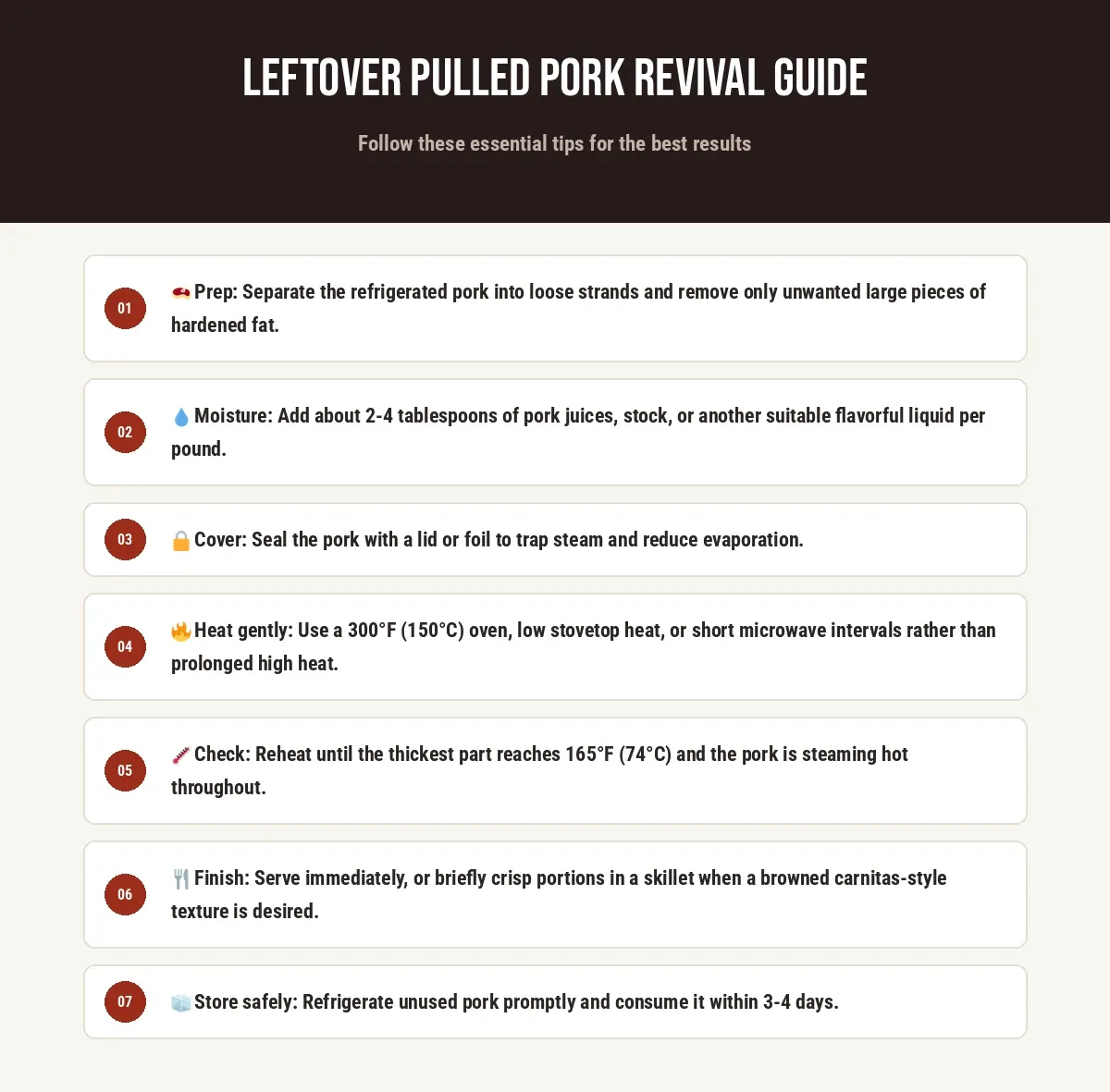
Leftover pulled pork can be excellent on day one and dry, stringy, or chewy after reheating. The fix is not simply “heat it longer”. Pulled pork has already been cooked until its connective tissue breaks down, so the second heating needs to warm it through while minimizing further moisture loss. The most reliable approach is to loosen the pork, add a small amount of flavorful liquid, cover it, and reheat gently. Save any accumulated cooking juices, pan drippings, or sauce from the original meal; they are often more useful than adding plain water.
Why Leftover Pulled Pork Loses Its Texture?
Pulled pork loses texture primarily because reheating drives additional moisture out of the meat. During the original long cook, collagen converts into gelatin and the muscle fibers become tender enough to shred. That process does not reverse after refrigeration. When the cooked pork is reheated, its muscle proteins can tighten further and squeeze out some of the water they retained during the first cooking cycle. Uncovered, high-heat reheating accelerates evaporation from the surface, leaving the strands noticeably drier.
Refrigeration also changes how the meat feels. Fat solidifies, gelatin firms up, and the pork becomes less supple and cohesive. This is why cold pulled pork can seem unusually dense even though it was tender when freshly cooked. Gentle reheating melts the fat and softens the gelatin again, but excessive heat can push the meat past that useful point and make the individual strands tougher.
The goal is therefore to replace some lost surface moisture, melt the chilled fat and gelatin, and heat the pork efficiently rather than continuing to cook it aggressively. A covered environment works particularly well because the escaping steam stays close to the meat instead of disappearing into the oven or microwave.
Step-by-Step Revival: A 3-step Guide
Step 1: Prep
Take the amount you plan to eat and separate it into loose strands with clean forks or your fingers. Break apart compact refrigerated chunks rather than reheating one solid mass. Remove large pieces of hardened fat if they are unwanted, but keep small pieces of rendered fat because they contribute moisture and flavor as they melt.
For a large batch, spread the pork into a relatively even layer in a shallow baking dish or saucepan. If the pork was stored with its juices, scrape those juices into the meat. If it was stored dry, add the moisture in the next step before heating. Avoid piling a thick mound of pork into a cold pan because the outside can become dry before the center is hot.
Step 2: Moisture
For every pound of leftover pulled pork, start with about 2 to 4 tablespoons of liquid. The best choice is reserved pork cooking juices or defatted pan juices. If those are unavailable, use a small amount of unsalted or low-sodium chicken stock, pork stock, apple juice, or a thin barbecue sauce. For pork intended for tacos or carnitas, a little stock combined with orange or lime juice can restore moisture without making the meat taste watery.
The liquid should moisten the pork rather than submerge it. Toss the strands gently so the liquid reaches different parts of the meat. For oven reheating, cover the dish tightly with a lid or foil. For microwave reheating, use a microwave-safe covered container with a vented lid or loosely covered top. The trapped steam is important: it reduces evaporation while the added liquid supplies moisture that can coat the meat as it warms.
Step 3: Heat
For the most even result, use a covered oven at about 300°F (150°C). Heat a small portion for roughly 15 to 20 minutes and a larger batch for about 25 to 40 minutes, stirring once if practical. The pork is ready when it is steaming hot throughout, the chilled fat and gelatin have softened, and the strands separate easily without feeling dry. For food safety, reheated leftovers should reach 165°F (74°C).
A covered saucepan over low heat works well for smaller portions. Add the pork and liquid, cover, and stir occasionally so the bottom does not dry or stick. The microwave is fastest, but it needs short intervals and stirring because its uneven heating can leave some areas cold while overcooking others. Avoid using a very hot skillet for a full reheating cycle; it can crisp the surface before the interior has warmed. A skillet is better used afterward for a brief finishing step when crispy edges are specifically wanted.
| Reheating method | Typical setting | Small portion, about 4 oz | Medium portion, about 1 lb | Large portion, about 2-3 lb | Instructions |
|---|---|---|---|---|---|
| Covered oven | 300°F / 150°C | 10-15 min | 20-30 min | 30-45 min | Add 2-4 tbsp liquid per lb, cover tightly, and heat until 165°F throughout. |
| Covered saucepan | Low heat | 5-10 min | 10-20 min | 20-30 min | Add liquid, cover, stir periodically, and prevent the bottom from scorching. |
| Microwave | Medium-high power | 1-2 min | 3-5 min | 6-10 min | Cover loosely, heat in short intervals, stir between intervals, and check the center for 165°F. |
| Skillet | Low to medium-low | 3-5 min | 6-10 min | 10-15 min | Add a splash of stock or cooking juice, cover initially, then uncover briefly if you want browned edges. |
Times vary with starting temperature, container shape, and appliance power. For a large quantity, divide the pork into smaller portions before reheating; it warms faster and more evenly.
3 Simple Culinary Ideas To Repurpose Leftover Pulled Pork
Tacos And Carnitas
Turn reheated pork into a new meal by giving it a different texture and seasoning profile. Warm the pork with a little stock and citrus juice, then spread it in a skillet in a thin layer. Let some of the edges brown and crisp instead of stirring constantly. Serve in tortillas with cabbage, beans, salsa, avocado, pickled onions, or other toppings. The contrast between crisp pork and fresh toppings makes slightly tired leftovers feel substantially different.
Pulled Pork Fried Rice
Chop or shred the pork into smaller pieces and use it as the protein in fried rice. Start with cold cooked rice, because its drier surface helps it fry rather than steam. Cook the pork briefly with vegetables, add the rice, then season with soy sauce or another savory sauce. Add the pork toward the end if it is already quite dry so it does not spend unnecessary time over direct heat.
Loaded Baked Potatoes
Reheat the pork gently with a little stock or barbecue sauce, then spoon it over baked potatoes. Add ingredients that provide contrasting textures, such as shredded cabbage, corn, scallions, or a crisp vegetable topping. This is especially useful for small amounts of leftover pork because the potato turns a modest quantity of meat into a complete meal without requiring a large second batch of pork.
Rehydrating Bulk Pulled Pork, Carnitas, And Shredded Pork
For several pounds of refrigerated pulled pork, use a covered roasting pan or deep baking dish rather than trying to reheat everything in one uncovered skillet. Separate the pork first, distribute it evenly, and add roughly 2 to 4 tablespoons of liquid per pound. Pork cooking juices are the first choice; stock is the safest neutral substitute. Add barbecue sauce only when its sweetness and acidity fit the intended use.
Cover the pan tightly and heat at 300°F (150°C). Stir or redistribute the pork once during heating if the batch is deep. Check the thickest part of the batch with a food thermometer and continue heating until it reaches 165°F (74°C). If the pork is already hot but still seems dry, add a little more warm stock or cooking juice and mix before serving rather than extending the cooking time substantially.
For carnitas, use less liquid if the goal is to restore tenderness before crisping. Once the pork is hot and supple, transfer portions to a hot skillet or griddle for a short finishing step. Let the meat develop browned edges, then remove it promptly. This separates the two jobs: gentle reheating restores moisture, while brief high heat creates crispness.
For bulk meal preparation, reheat only what will be served when possible. Repeatedly cooling and reheating the entire batch increases both quality loss and food-safety risk. Keep the unused refrigerated portion cold and reheat individual servings as needed.
Food Safety
-
Cooling time: Refrigerate cooked pulled pork within 2 hours of cooking or serving, or within 1 hour when the surrounding temperature is above 90°F (32°C). Divide a large quantity into shallow containers so it cools more quickly rather than leaving a deep, hot mass to cool slowly.
-
Airtight storage: Store the pork in clean, shallow, airtight containers or tightly sealed bags. Removing excess air helps limit drying and protects the meat from absorbing refrigerator odors. Keep the refrigerator at 40°F (4°C) or below.
-
Safe fridge days: Use refrigerated cooked pork within 3 to 4 days. When reheating, bring it to 165°F (74°C) throughout. If you will not use it within that window, freeze it promptly rather than extending its refrigerator life.