The Best Ways to Use Up Leftover Honey Baked Ham
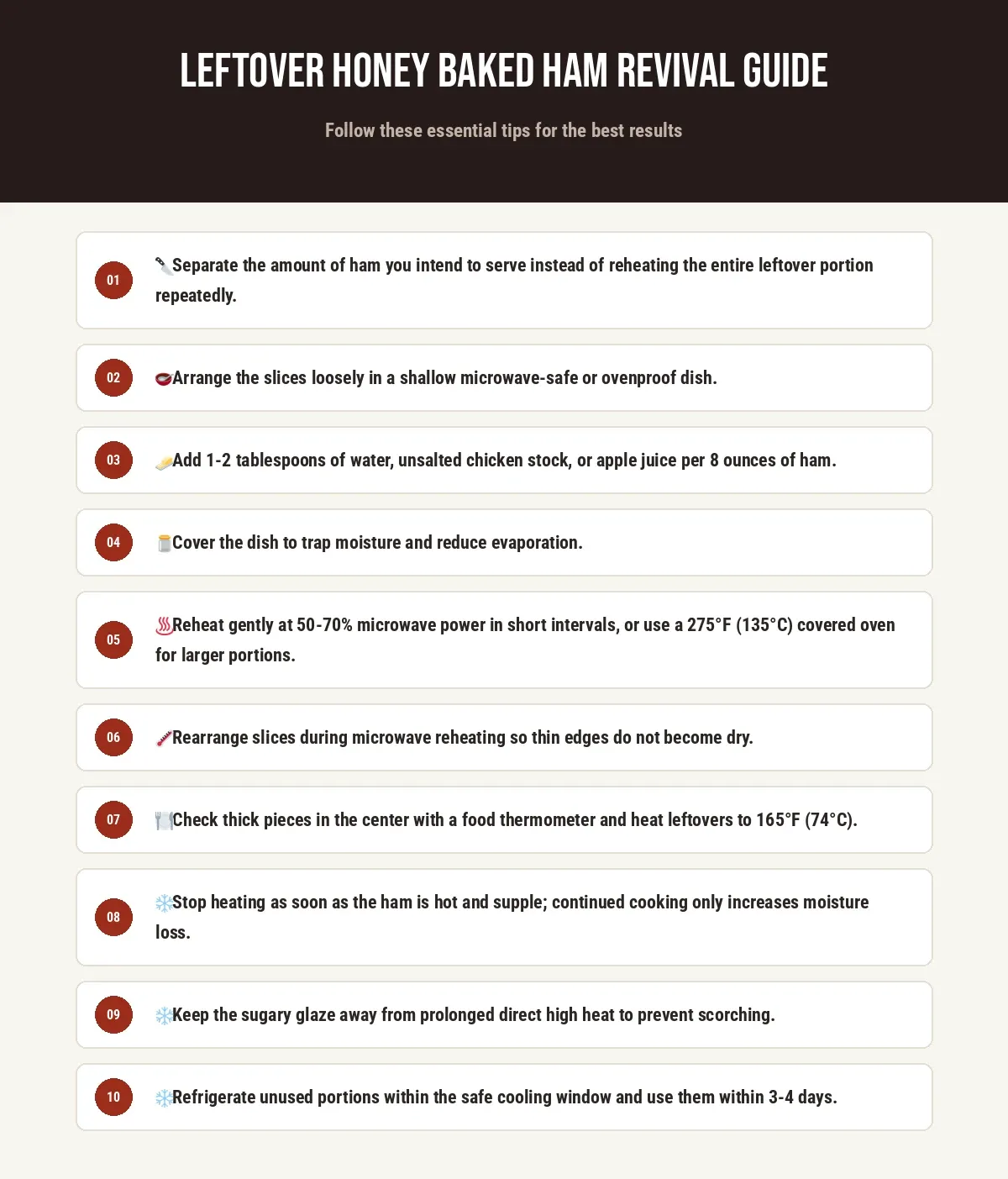
Leftover Honey Baked Ham can be just as useful as the original meal, but reheating it carelessly turns tender slices dry, chewy, and tough. The goal is not to cook the ham again. It is to warm it through while minimizing additional moisture loss and protecting the sweet glaze from scorching. Thin slices need only brief, gentle heating; thicker pieces need more time and a controlled source of moisture.
The most reliable approach is simple: separate the slices, add a small amount of moisture, cover the ham, and heat it gently. Use the microwave for a few slices when speed matters, or a covered oven for a larger portion. If the ham has a sugary crust, avoid prolonged exposure to high direct heat because the glaze can darken or burn before the center is warm.
Why Leftover Honey Baked Ham Loses Its Texture?
Ham is already a cooked, relatively lean meat, so reheating gives it little room for error. Its muscle proteins have already been altered by the original cooking process. When you heat the meat again, those proteins tighten further and squeeze out some of the water held within the muscle structure. The longer and hotter the reheating, the more moisture the ham loses.
Honey-baked ham presents an additional problem because its sweet exterior encourages browning. The caramelized sugar coating can become excessively dark under intense heat even while the interior is still warming. A dry oven, uncovered skillet, or repeated microwave heating can therefore produce two undesirable results at once: a tough, dehydrated interior and an overcooked glaze.
Thin spiral-cut slices are particularly vulnerable because their large exposed surface area allows moisture to escape quickly. Thick chunks retain moisture somewhat better but take longer to warm. Refrigeration also makes the fat firmer and the meat less supple, so cold leftovers naturally seem denser than freshly served ham. Gentle reheating with a covered environment helps compensate for these changes without cooking the meat more than necessary.
Step-by-Step Revival: A 3-step Guide
Step 1: Prep
Take only the amount of ham you plan to eat and separate spiral slices rather than heating the entire stack as one mass. For a thick piece, cut it into serving-sized portions so heat can reach the center without requiring excessive cooking time. Leave the glaze intact, but remove any loose, excessively dark pieces of crust that could scorch during reheating.
Arrange the slices in a single, slightly overlapping layer in a microwave-safe dish or shallow ovenproof baking dish. Avoid piling slices several inches deep because the outside can become overcooked before the middle warms. If the ham has been refrigerated in a tightly packed container, gently loosen the slices with clean utensils before heating.
Step 2: Moisture
Use water, unsalted chicken stock, or apple juice as the moisture source. For about 8 ounces of sliced ham, add 1 to 2 tablespoons of liquid around the ham rather than pouring it directly over the glaze. Apple juice complements the honey glaze particularly well, while water provides moisture without changing the flavor and unsalted chicken stock adds a savory note.
Cover the dish tightly with a microwave-safe lid, microwave-safe plate, or foil when using the oven. The trapped moisture creates a humid environment that reduces evaporation from the meat. You are not trying to soak the ham; a small quantity of liquid is enough to create steam during reheating. For especially thin slices, placing a damp-not dripping-paper towel over the ham before covering the dish can provide additional protection in the microwave.
Step 3: Heat
Heat the ham gently and stop as soon as it is hot throughout. In a microwave, use medium power in short intervals, turning or rearranging the slices between intervals so the edges do not overcook. In an oven, cover the dish and use about 275°F (135°C) rather than a high roasting temperature. The ham should feel hot and supple when tested in the center, with visible steam appearing when the cover is lifted. For food-safety purposes, reheated leftovers should reach 165°F (74°C) measured with a food thermometer.
| Reheating method | Temperature/setting | Approximate time | Best portion size | Instructions |
|---|---|---|---|---|
| Microwave | 50-70% power | 20-30 seconds per interval | 2-4 slices | Add 1-2 teaspoons of liquid per serving, cover, heat in short intervals, and rearrange between intervals. |
| Covered oven | 275°F (135°C) | About 10-15 minutes | 4-8 slices | Place ham in a shallow dish with 1-2 tablespoons of liquid per 8 ounces, cover tightly, and heat until hot throughout. |
| Covered oven, thick piece | 275°F (135°C) | About 15-25 minutes | 1-2 thick portions | Add a little liquid, cover tightly, and check the center with a thermometer rather than relying only on surface temperature. |
| Skillet | Low heat | About 3-6 minutes | 2-4 slices | Add a tablespoon of water or stock, cover, and warm gently; avoid high heat that can burn the sugary glaze. |
3 Simple Culinary Ideas To Repurpose Leftover Honey Baked Ham
Ham And Egg Breakfast Hash
Dice the ham and warm it in a skillet with cooked potatoes, onions, and peppers. Add the ham near the end rather than frying it aggressively from the beginning; this preserves its tenderness and prevents the honey glaze from burning. Top the finished hash with a cooked egg or fold the mixture into scrambled eggs. The sweet ham works particularly well with crisp potatoes and savory vegetables.
Honey Ham Grilled Cheese
Use thin ham slices inside a grilled cheese sandwich with a mild or moderately sharp cheese such as Swiss, provolone, cheddar, or Monterey Jack. Put the ham between the cheese rather than directly against the hot pan so the sugary coating is less likely to scorch. Cook the sandwich over medium-low heat until the bread is crisp and the cheese melts. A small amount of mustard balances the sweetness without requiring additional sauce.
Ham, Bean, And Vegetable Soup
Dice thicker leftover pieces and add them to a bean or vegetable soup during the final portion of cooking. Because the ham is already cooked, it only needs enough time to heat and flavor the broth. Save the bone, if you have one and it is appropriate for your recipe, for a separate batch of soup or beans; simmering it can extract additional flavor without subjecting the already-sliced meat to prolonged reheating.
Glaze Preservation For Spiral, Holiday, And Deli Ham Slices
Treat the glaze as a separate texture to protect. Honey, sugar, and other sweet glaze ingredients brown rapidly under direct high heat, so do not re-crisp leftover glazed ham at high temperature unless you are deliberately watching it for a very short finishing step. For spiral slices, keep the glazed surfaces covered during most of the reheating period and expose them only briefly if you want the exterior warmer or slightly more caramelized.
For a whole holiday-style portion, cover the ham tightly with foil and add a modest amount of water, apple juice, or stock to the dish. Keep the liquid around the meat rather than flooding the glazed surface. Deli ham is usually thinner and less heavily glazed, so it needs substantially less reheating time; warm it only until it reaches the desired serving temperature. If you plan to use the ham cold in sandwiches or salads, skip reheating entirely and preserve its texture by keeping it refrigerated until serving.
Food Safety
-
Cooling time: Refrigerate cooked ham within 2 hours of serving, or within 1 hour if the surrounding temperature is above 90°F (32°C). Divide a large amount into shallow containers or smaller portions so it cools efficiently rather than leaving a deep mass of hot food to cool slowly.
-
Airtight storage: Store leftover ham in clean, airtight containers or tightly wrapped packaging. Keep the refrigerator at 40°F (4°C) or below. Limiting air exposure helps reduce drying and protects the ham from absorbing odors from other foods.
-
Safe fridge days: Use refrigerated cooked ham within 3-4 days. When reheating, heat leftovers to 165°F (74°C). If you will not use the ham within that window, freeze it promptly rather than extending its refrigerator storage.