Simple Methods to Reheat Cooked and Steamed Shrimp Safely
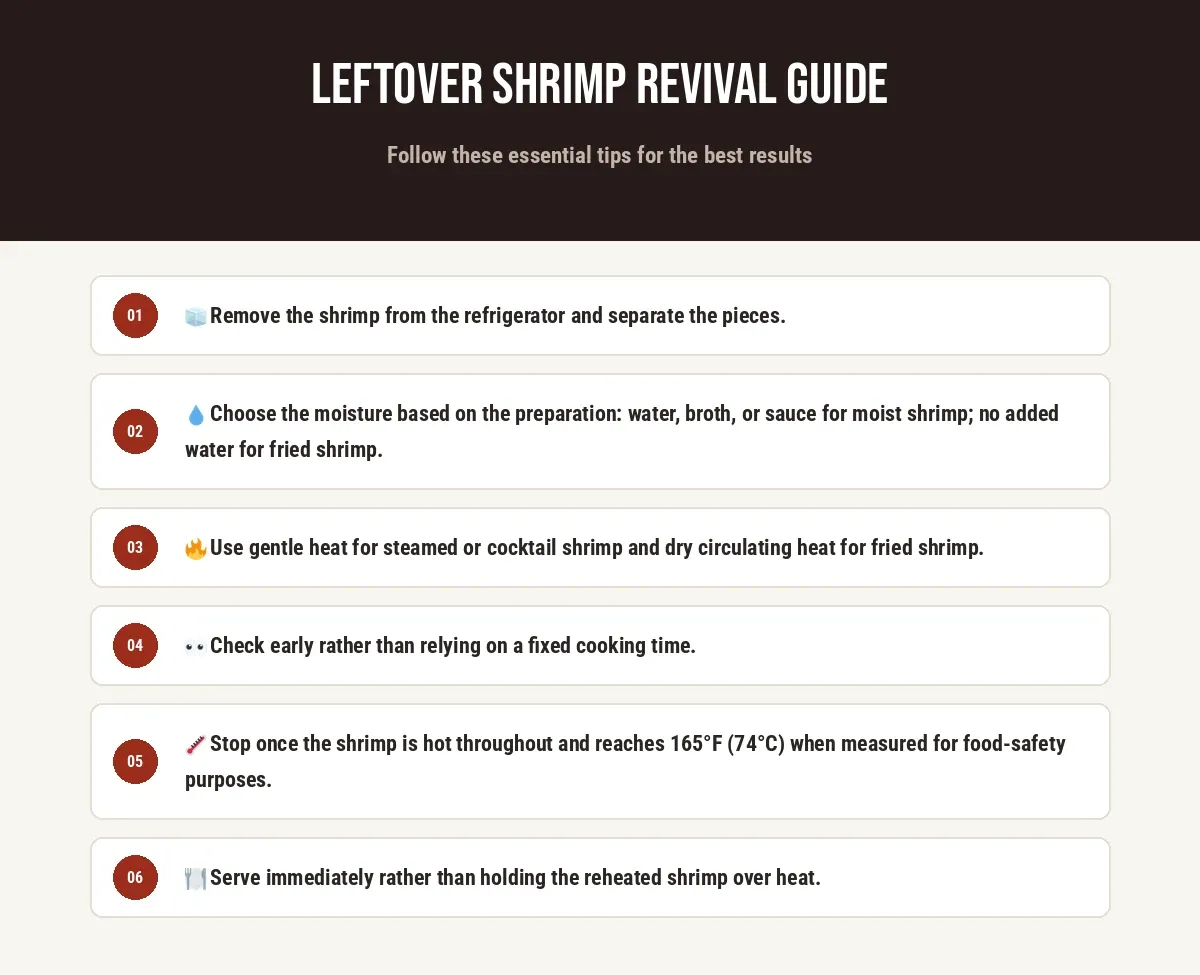
Leftover shrimp can still taste fresh, but reheating it carelessly turns firm, juicy meat rubbery and dry. The goal is not to cook shrimp again. It is to warm it through as quickly and gently as possible while adding just enough moisture to slow further drying.
The best method depends on how the shrimp was originally cooked. Steamed or boiled shrimp needs gentle, moist heat. Cocktail shrimp usually needs little more than brief warming, while fried shrimp needs dry heat to restore its crisp coating without steaming the crust. Keep portions small, heat only what you plan to eat, and stop as soon as the center is warm.
Why Leftover Shrimp Loses Its Texture?
Shrimp is mostly water and protein. During its first cooking, heat causes muscle proteins to denature and contract, changing the translucent raw flesh into the firm, opaque texture you recognize as cooked shrimp. Once those proteins have tightened, another round of high heat makes them contract further and squeezes out more water.
Refrigeration also changes the eating experience. As cooked shrimp sits, moisture redistributes within the meat and some evaporates from the surface. When you reheat it at high temperature or for too long, the remaining moisture escapes faster than it can be replaced. The result is firm, chewy meat rather than tender shrimp.
Size matters, too. Small shrimp heat through almost immediately, while large shrimp can take longer. That creates a narrow window between cold in the center and overcooked throughout. Gentle heat, a little added moisture, and frequent checking give you much more control.
Step-by-Step Revival: A 3-step Guide
Step 1: Prep
Remove the shrimp from the refrigerator and separate pieces that are stuck together. Pat surface moisture away if the shrimp is going into a skillet or oven, particularly for fried shrimp, because excess water will soften the coating.
For sauced or steamed shrimp, place the pieces in a single layer so heat reaches them evenly. If the shrimp are large, arrange them with space between them rather than piling them into a deep container. Do not peel shrimp solely for reheating; the shell can help protect the meat from drying if it is still attached.
Step 2: Moisture
For steamed, boiled, or cocktail shrimp, use a small amount of water, seafood stock, or lemon-free light broth. About 1-2 teaspoons for a small serving is usually enough. In a covered skillet, the liquid creates gentle steam that warms the shrimp while reducing surface moisture loss.
For shrimp already sitting in a sauce, use the sauce itself or a teaspoon of water to loosen it. For fried shrimp, skip added water because steam makes breading or batter soggy. Instead, use the dry heat of an oven, toaster oven, or air fryer; a very light coating of cooking oil can help restore crispness if the exterior has become dry.
Step 3: Heat
Use the lowest effective heat and stop as soon as the shrimp is hot throughout. For moist preparations, a covered skillet over low to medium-low heat works well: warm the liquid first, add the shrimp, cover, and heat briefly, turning once if necessary. The shrimp should feel warm at the center and remain firm but springy rather than becoming hard or tightly curled.
For fried shrimp, heat uncovered with circulating dry air until the coating is crisp and the center is warm. Avoid relying on color alone. If you have a food thermometer, reheated leftovers should reach 165°F (74°C) for food-safety purposes, although shrimp can become overcooked if held at that temperature for an extended period.
| Reheating method | Typical time | Setting | Best portion size | Instructions |
|---|---|---|---|---|
| Covered skillet | 2-4 minutes | Low to medium-low | 1-2 servings | Add 1-2 tsp water or broth, cover, and turn shrimp once. |
| Steamer | 2-4 minutes | Gentle steam | 1-3 servings | Arrange shrimp in one layer and steam only until warmed through. |
| Microwave | 20-30 seconds, then 10-15 second intervals | 50-70% power | 1 serving | Add a few drops of water or broth, cover loosely, and check frequently. |
| Oven/toaster oven | 5-8 minutes | About 300°F (150°C) | 2-4 servings | Cover moist shrimp loosely to prevent drying; uncover fried shrimp to preserve crispness. |
| Air fryer | 2-4 minutes | About 325°F (165°C) | 1-2 servings | Best for fried shrimp; arrange in one layer and check early. |
3 Simple Culinary Ideas To Repurpose Leftover Shrimp
Shrimp Fried Rice
Chop larger leftover shrimp into bite-size pieces and add them near the end of a batch of fried rice. Cook the rice, vegetables, egg, and seasonings first, then fold in the shrimp for the final minute or two. This keeps the shrimp from spending the entire cooking time over direct heat. A splash of soy sauce or a small amount of broth can loosen the rice without requiring extra oil.
Quick Shrimp Tacos
Warm the shrimp gently, then tuck them into warmed tortillas with cabbage, avocado, corn, salsa, or another fresh topping. Keep the shrimp warming separate from acidic ingredients such as lime juice and salsa. Add those immediately before serving so the shrimp remains tender and the fresh toppings retain their texture.
Creamy Shrimp Pasta
Warm the shrimp separately while preparing the pasta and sauce. Stir the shrimp into the finished sauce only during the final minute. A little pasta water can loosen the sauce and provide enough moisture to coat the shrimp without requiring prolonged cooking. This works especially well with garlic, tomato, cream, or light herb sauces.
Warming Delicate Steamed, Cocktail, And Fried Shrimp Portions
Steamed shrimp is the easiest to revive gently because it already contains moisture from its original cooking. A covered skillet with a teaspoon or two of water or broth is usually enough. Warm it briefly and remove it immediately once the center is hot.
Cocktail shrimp is often best served cold, so reheating is optional. If you prefer it warm, use very gentle heat and avoid boiling the shrimp in water. A short steam or brief covered skillet warming is sufficient. Keep cocktail sauce separate and add it after warming.
Fried shrimp requires the opposite approach. Moisture is the enemy of its crust, so do not cover it and do not add water. Use an oven, toaster oven, or air fryer to circulate dry heat around the coating. Spread the shrimp in one layer and stop as soon as the exterior is crisp and the center is warm.
Food Safety
-
Cool promptly: Refrigerate cooked shrimp within 2 hours of cooking or serving, or within 1 hour if the surrounding temperature is above 90°F (32°C). Divide a large quantity into shallow containers so it cools quickly rather than remaining warm in the center.
-
Store airtight: Keep shrimp in a clean, airtight container or tightly covered dish at 40°F (4°C) or below. Limit exposure to room temperature, and do not repeatedly warm and rechill the same portion.
-
Use within 3-4 days: Refrigerated cooked shrimp should generally be eaten within 3-4 days. Reheat only the portion you intend to eat, and heat leftovers thoroughly to 165°F (74°C).