Leftover pork tenderloin is worth saving because it starts out exceptionally lean and tender, but that same leanness makes reheating unforgiving. The goal is not to cook the pork again. It is to warm it through while replacing some of the moisture lost during its first cooking and subsequent refrigeration.
For the best result, refrigerate the tenderloin whole when possible, then slice only what you plan to eat. Thin slices have much more exposed surface area and dry out faster. When reheating already-sliced pork, use gentle heat, a little added moisture, and a covered cooking environment. A quick blast of high heat is the easiest way to turn tender leftovers into chewy ones.
Why Leftover Pork Tenderloin Loses Its Texture?
Pork tenderloin contains relatively little fat and connective tissue compared with tougher cuts such as pork shoulder. During the original cooking process, heat causes muscle proteins, particularly myosin and actin, to denature and contract. As those proteins tighten, water held within the muscle structure is pushed outward. The higher the internal temperature climbs, the more pronounced that contraction becomes.
Refrigeration creates a second texture change. As the cooked meat cools, its juices redistribute and some moisture migrates toward the surface. Once the pork is reheated, additional protein contraction squeezes out more water. Because tenderloin has little internal fat or gelatin to compensate for this loss, the meat can quickly become dry, firm, and stringy.
The problem becomes worse when reheating is too hot or too long. A microwave can create localized hot spots, while an uncovered skillet exposes the pork’s surface directly to evaporative heat. The objective is therefore to minimize the temperature difference between the pork and its surroundings, keep the environment humid, and stop heating as soon as the center is hot enough to serve.
Step-by-Step Revival: A 3-step Guide
Step 1: Prep
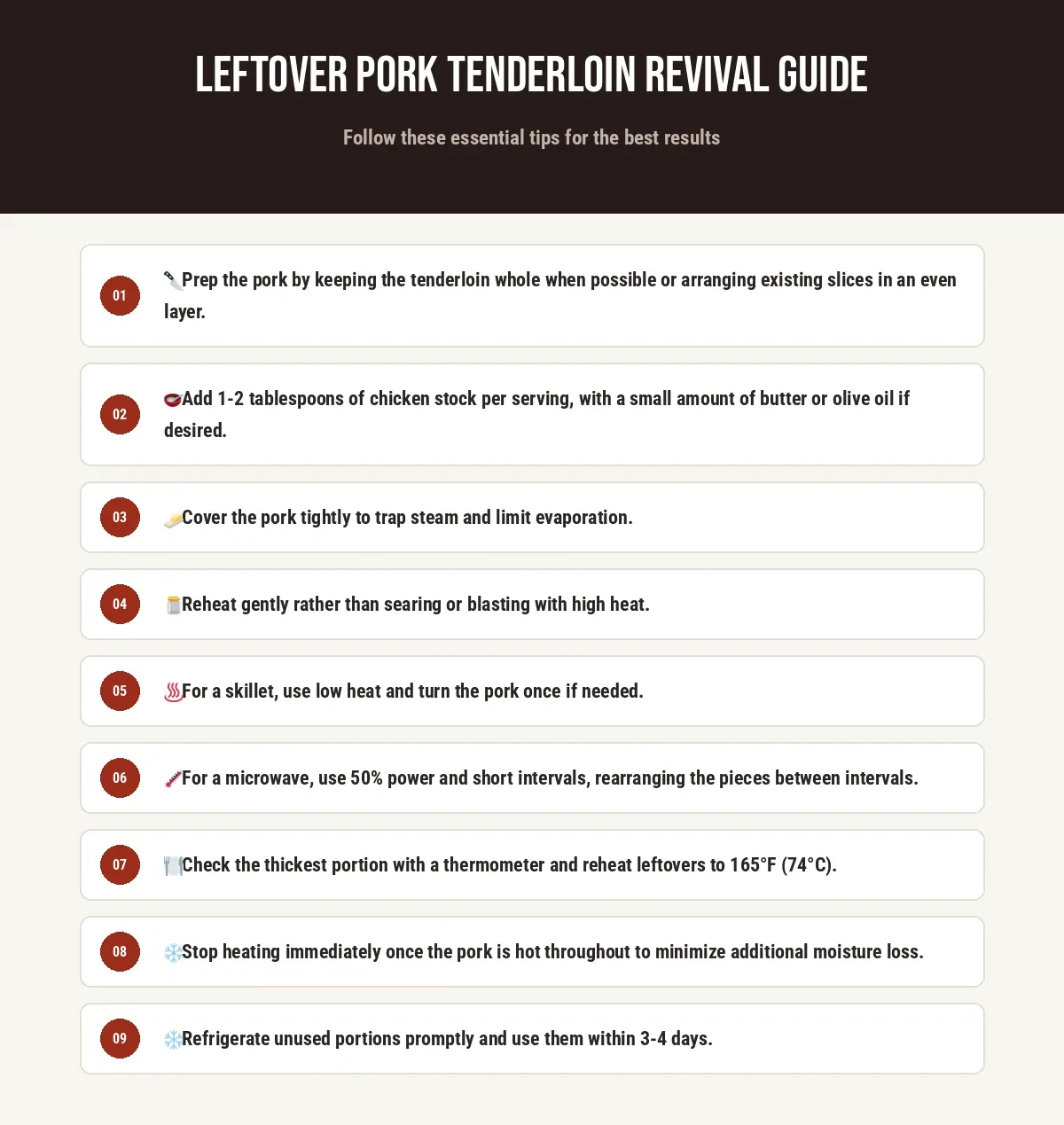
If the tenderloin is whole, keep it whole for reheating whenever practical. Slice it afterward. If it is already sliced, arrange the pieces in a single, slightly overlapping layer rather than piling them tightly together. This allows heat and moisture to reach the meat evenly.
Let refrigerated pork sit out only while you are preparing the reheating setup; do not leave it at room temperature for an extended period. Pat away excessive surface moisture if the pork is wet from storage, then place it in a shallow heatproof dish or skillet. For very thick pieces, cut them into portions of roughly equal thickness so they warm at the same rate.
Step 2: Moisture
Use low-sodium chicken stock as the primary added liquid. Add about 1 to 2 tablespoons per serving, enough to create a moist environment without submerging the pork. For extra richness, add a small amount of butter or olive oil to the stock. The liquid should surround the pork rather than soak it.
Covering the pork is just as important as adding liquid. A lid, tightly sealed foil, or microwave-safe cover traps steam and reduces evaporation from the meat’s surface. The stock provides water that can turn into steam, while the enclosed environment prevents that moisture from escaping. If the pork will be served with a sauce, gravy, or pan juices, those can replace some or all of the stock.
Step 3: Heat
For the most consistent texture, gently reheat pork tenderloin in a covered skillet over low heat. Add the stock, arrange the pork in the pan, cover tightly, and warm until the pieces are heated through. Turn the slices once if necessary. The pork should feel hot in the center but remain supple when pressed rather than firm and rigid. Avoid letting the liquid boil vigorously because aggressive bubbling and prolonged high heat accelerate moisture loss.
For a microwave, cover the pork with a microwave-safe lid or damp paper towel and use 50% power in short intervals. Rotate or rearrange the pieces between intervals because microwaves do not heat meat uniformly. Stop as soon as the pork is thoroughly hot; continued heating after that point only increases moisture loss.
For food safety, leftovers should be reheated to 165°F (74°C). A quick-read thermometer inserted into the thickest portion gives a more reliable indication than appearance alone.
| Reheating method | Approx. time | Setting | Instructions |
|---|---|---|---|
| Covered skillet | 5-8 minutes for 1 serving; 8-12 minutes for 2-4 servings | Low heat | Add 1-2 tbsp chicken stock per serving, cover, and turn the pork once. Heat gently until the center reaches 165°F. |
| Oven | 10-15 minutes for 1-2 servings; 15-20 minutes for 3-4 servings | 275°F (135°C) | Put pork in a covered baking dish with a few tablespoons of stock. Heat gently until hot throughout. |
| Microwave | 1-2 minutes for 1 serving; 2-4 minutes for 2-4 servings | 50% power | Add stock, cover, and heat in 20-30-second intervals, rearranging between intervals. |
| Air fryer | 4-6 minutes for 1 serving; 6-9 minutes for 2-4 servings | 300°F (150°C) | Wrap or tightly cover the pork with foil and add a small spoonful of stock. Check early to prevent drying. |
3 Simple Culinary Ideas To Repurpose Leftover Pork Tenderloin
Pork Fried Rice
Dice the cold pork into small pieces and add it near the end of cooking fried rice. Because the pork is already cooked, it only needs enough heat to warm through. Combine it with cold cooked rice, scrambled egg, peas, carrots, scallions, and a modest amount of soy sauce. A splash of chicken stock can loosen the mixture if it becomes dry. Adding the pork late keeps its reheating time short and protects its texture.
Pork Tacos
Slice the tenderloin thinly across the grain and warm it gently in a covered skillet with a tablespoon or two of chicken stock. Add cumin, smoked paprika, garlic, or a mild chili seasoning according to taste. Serve in warm tortillas with cabbage, beans, corn, avocado, salsa, or another moist topping. The fresh toppings provide contrast while the stock prevents the pork from becoming dry during its second heating.
Pork And Vegetable Grain Bowls
Cut the pork into thin strips and pair it with cooked rice, quinoa, roasted vegetables, and a sauce such as yogurt-herb dressing, mustard sauce, or a light pan gravy. Warm the pork separately with a little stock, then place it over the finished bowl instead of reheating everything together. This prevents the vegetables from becoming overcooked while limiting the pork’s exposure to heat.
Food Safety
-
Cool promptly: Refrigerate cooked pork within 2 hours of cooking or serving, or within 1 hour if the surrounding temperature is above 90°F (32°C). Divide a large amount into shallow containers so it cools faster rather than leaving a deep, hot mass to cool slowly.
-
Store airtight: Keep the tenderloin in a tightly sealed container or wrap it securely to limit air exposure, moisture loss, and contamination. If possible, store the pork whole and slice only the amount needed for each meal.
-
Use within 3-4 days: Cooked pork leftovers should generally be kept refrigerated at 40°F (4°C) or below and eaten within 3-4 days. If you will not use them within that window, freeze them promptly rather than repeatedly reheating and refrigerating the same portion.