How to Revive Plain Leftover Spaghetti Noodles (So They Don’t Stick)
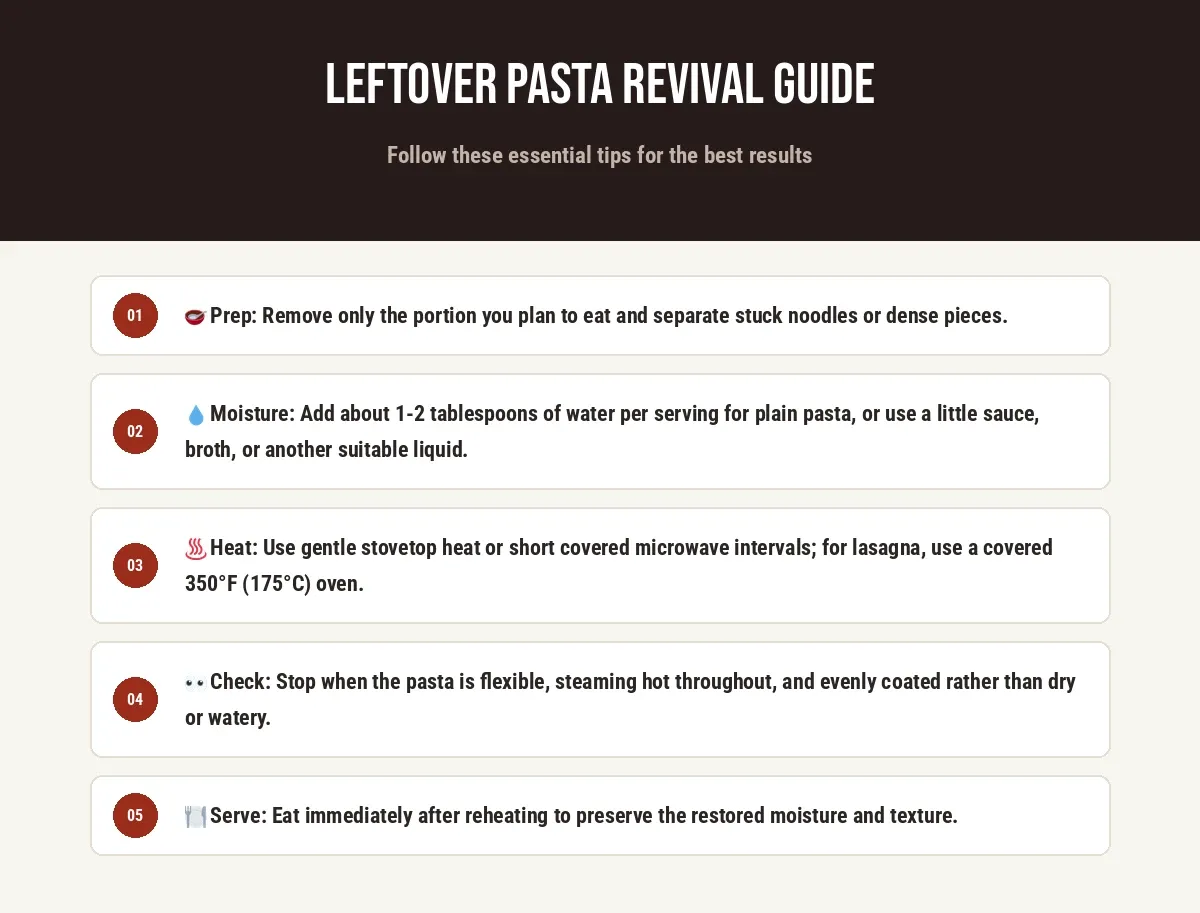
Leftover pasta is easy to save, but reheating it badly can turn a good meal into a sticky, dry, or rubbery mess. The goal is not simply to make cold pasta hot again. You need to restore enough moisture to loosen the starch while heating it gently enough to prevent further drying. The best method depends on whether you have plain noodles, sauced pasta, lasagna, or filled pasta such as ravioli.
For the best results, refrigerate cooked pasta promptly after the meal, store it in an airtight container, and reheat only the amount you plan to eat. Small portions heat more evenly, so divide a large quantity before reheating rather than repeatedly heating and cooling the entire batch.
Why Leftover Pasta Loses Its Texture?
Freshly cooked pasta contains starch that has absorbed water during boiling. As the pasta cools, the starch molecules gradually reorganize and tighten their structure, a process called starch retrogradation. That change makes refrigerated pasta firmer and less flexible than it was immediately after cooking. The pasta also continues exchanging moisture with its sauce and the surrounding air. Sauced pasta can become sticky as starch migrates into the sauce, while exposed noodles can develop dry, chewy edges.
Reheating does not automatically reverse these changes. If you heat pasta with dry heat alone, such as leaving it uncovered in a hot oven, water evaporates faster than it can be restored. The outside becomes tough before the center is properly heated. Microwaving can cause a similar problem when pasta is heated too long or without additional moisture: parts of the pasta become dry and rubbery while other areas become excessively hot.
The fix is controlled moisture plus moderate heat. A small amount of water loosens the starch and creates steam, while a little sauce, broth, or fat can improve the texture of the finished dish. The aim is to heat the pasta until it is flexible, hot throughout, and coated rather than wet or mushy.
Step-by-Step Revival: A 3-step Guide
Step 1: Prep
Take only the portion you intend to eat from the refrigerator. Separate stuck-together noodles gently with a fork or clean hands if the pasta is cool enough to handle. For pasta covered in thick sauce, break up dense areas so the heat can reach the center evenly. If the pasta has been stored with meat, vegetables, or other large ingredients, distribute everything into an even layer.
For plain noodles, loosening the strands before heating prevents a solid mass from steaming unevenly. For baked pasta, lasagna, and filled ravioli, handle the food more gently because tearing the pasta can release filling or cause layers to separate.
Step 2: Moisture
Use 1-2 tablespoons of water per serving for plain pasta, adding it directly to the noodles before covering them. For pasta with tomato or cream sauce, use a small splash of water, milk, broth, or additional sauce according to the dish. Water is the safest general-purpose choice because it restores moisture without substantially changing the flavor.
For stovetop reheating, a tablespoon or two of pasta water, broth, or plain water can loosen a thick sauce. Add a small amount first; you can always add more. A teaspoon of olive oil or butter can help plain noodles separate and gives the surface a smoother texture, but fat alone cannot replace the moisture needed to soften refrigerated starch.
For microwave reheating, cover the container with a microwave-safe lid or a damp paper towel that does not touch the food excessively. The trapped steam slows moisture loss and distributes heat more evenly.
Step 3: Heat
For most leftover pasta, gentle stovetop heating or short microwave intervals produces the best texture. On the stovetop, place the pasta in a skillet or saucepan over medium-low heat, add the moisture, cover, and stir occasionally. Heat until the pasta is steaming hot throughout and flexible when lifted with a fork. If the sauce looks dry before the pasta is hot, add another small splash of liquid rather than increasing the heat sharply.
In a microwave, cover the pasta and heat at medium or high power in 30-45-second intervals, stirring between intervals when possible. Stop as soon as the center is hot. Overheating is the main cause of rubbery edges and dried-out sauce.
For baked pasta such as lasagna, cover the portion with foil and heat it in an oven at about 350°F (175°C) until the center is thoroughly hot. Adding a spoonful of sauce or water before covering helps prevent the exposed edges from drying.
| Reheating method | Typical time | Setting | Best portion size | Instructions |
|---|---|---|---|---|
| Microwave | 1-3 minutes | Medium-high/high, in 30-45-second intervals | 1-2 servings | Add 1-2 tbsp liquid per serving, cover, heat, stir when possible, and stop when steaming hot throughout. |
| Stovetop | 3-7 minutes | Medium-low | 1-4 servings | Add a small splash of water, broth, sauce, or pasta water; cover and stir periodically until hot and flexible. |
| Oven | 15-25 minutes | 350°F / 175°C | 2-6 servings | Place in a covered oven-safe dish, add a little sauce or water, cover tightly, and heat until the center is thoroughly hot. |
| Steaming | 3-8 minutes | Gentle steam | 1-3 servings | Place pasta in a heat-safe vessel, expose it to gentle steam, and heat until loosened and hot; especially useful for plain noodles. |
3 Simple Culinary Ideas To Repurpose Leftover Pasta
Turn It Into A Crispy Pasta Skillet
Cold pasta is ideal for a quick skillet meal because its firmer texture holds together well. Toss it with a small amount of oil and cook it in a wide skillet over medium heat. Leave it undisturbed for a few minutes so the bottom develops browned, crisp sections, then turn and break it into smaller pieces. Add cooked vegetables, beans, shredded chicken, or leftover roasted vegetables if available. A beaten egg can bind everything into a pasta hash, while grated cheese can create a crisp, browned coating.
Make A Pasta Frittata
Combine leftover pasta with beaten eggs, grated cheese, and any suitable cooked vegetables or herbs. Use enough egg to lightly coat and bind the pasta rather than drowning it. Cook the mixture in an oven-safe skillet over medium-low heat until the bottom is set, then finish gently in the oven or under a broiler until the center is firm. This works particularly well with plain or lightly sauced noodles that are no longer appealing on their own.
Turn It Into Soup
Short pasta or broken strands can become an easy addition to soup. Heat broth with vegetables, beans, cooked meat, or other leftovers, then add the pasta near the end so it warms without becoming excessively soft. If the pasta is already heavily sauced, rinse or separate it only if necessary; otherwise, add it to a thicker soup where its existing sauce can contribute flavor. Keep the cooking time short because the pasta has already been cooked once.
Reviving Plain Pasta Noodles Vs. Lasagna And Filled Ravioli
Plain noodles need moisture and separation. The quickest approach is to loosen them, add a small amount of water, and reheat them briefly in a covered skillet or microwave. Toss with sauce immediately after heating so the noodles do not sit exposed and dry out again.
Lasagna needs slower, covered heating because its multiple layers warm at different rates. The center can remain cold while the edges become dry, so cover the portion and use moderate oven heat. A spoonful of sauce on the surface helps protect the pasta and cheese from drying.
Filled ravioli requires gentler handling. Avoid vigorous stirring because the pasta can split and release the filling. Reheat ravioli in a lightly simmering sauce or with gentle steam, turning carefully with a slotted spoon. If using a microwave, arrange the pieces in a single layer with sauce or a small amount of water and cover them before heating.
Food Safety
-
Cooling time: Refrigerate cooked pasta and other perishable leftovers within 2 hours of cooking or serving, or within 1 hour if the surrounding temperature is above 90°F (32°C). Divide large quantities into shallow containers so they cool more quickly.
-
Airtight storage: Store pasta in clean, airtight containers or tightly sealed packaging. Keep the refrigerator at 40°F (4°C) or below to slow bacterial growth and prevent the pasta from absorbing odors and losing moisture.
-
Safe fridge days: Use refrigerated cooked pasta within 3-4 days. When reheating leftovers, heat them until they are steaming hot throughout, and discard food that has been left unrefrigerated beyond the safe time rather than trying to rescue it through reheating.