Leftover steak does not have to become dry, tough, or rubbery. The key is to stop treating it like raw meat that needs to be cooked again. Steak that has already reached its target doneness has already undergone the major structural changes caused by cooking. Your job during reheating is to warm it with as little additional moisture loss and protein tightening as possible.
The most reliable approach is gentle heat, a small amount of added moisture or fat, and a short finishing sear when you want a browned exterior. Thick steaks tolerate reheating better than thin slices, while lean cuts need noticeably more protection from heat.
Why Leftover Steak Loses Its Texture?
Steak loses its original texture mainly because reheating pushes its muscle proteins through additional contraction. During the first cooking, proteins such as myosin and actin denature and tighten. As the internal temperature rises further, those proteins squeeze out more water. That expelled moisture collects in the container or pan instead of remaining inside the muscle fibers, leaving the steak drier and firmer.
Refrigeration creates another texture change. As the steak cools, its rendered fat solidifies and its juices redistribute. A cold steak therefore feels firmer than it did immediately after cooking. Reheating can restore some of the softness by melting the fat again, but excessive heat accelerates moisture loss before the meat has time to warm evenly.
Cut thickness also matters. A whole, thick steak has a larger thermal buffer: its center can warm gradually while the exterior remains protected. Thin slices have much less protection, so a hot skillet can take them from chilled to overcooked in seconds. Surface area matters too. The more steak you slice before reheating, the more exposed surface there is for evaporation.
Step-by-Step Revival: A 3-step Guide
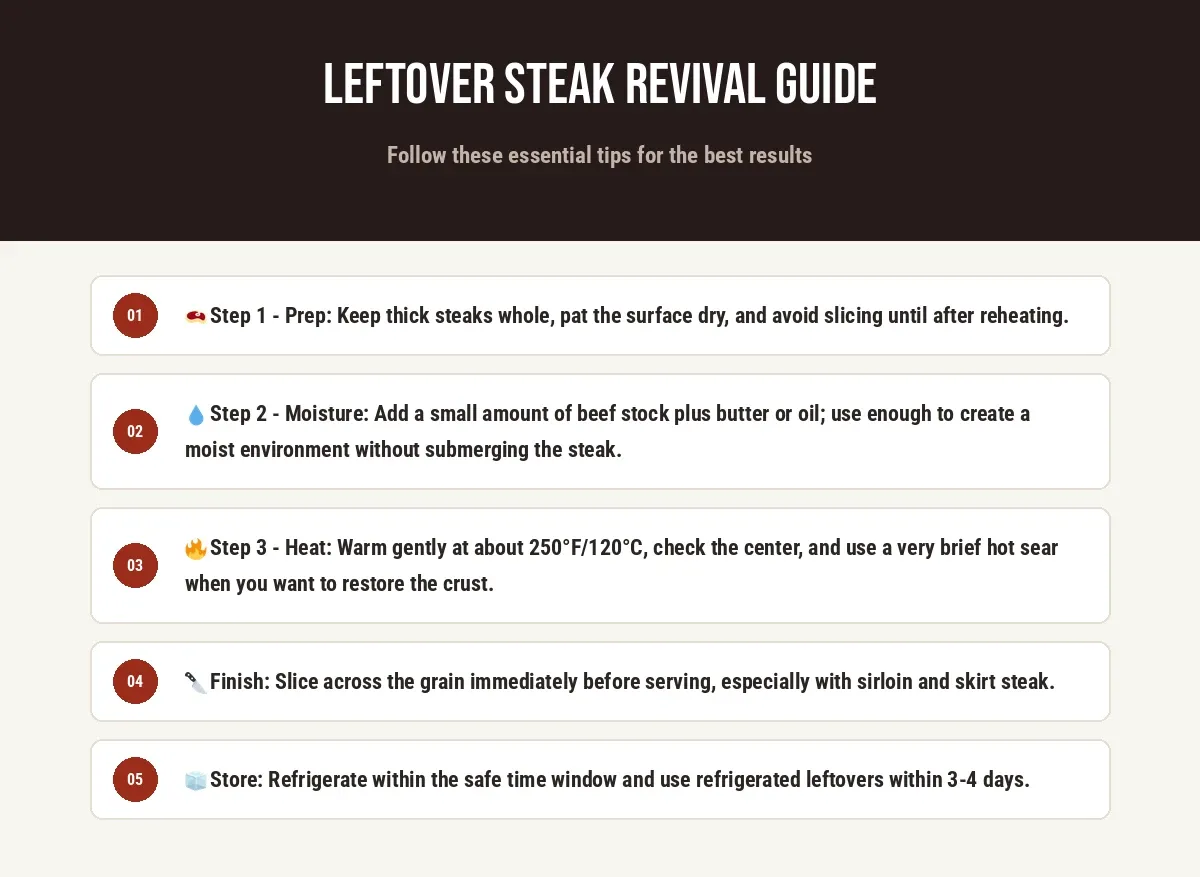
Step 1: Prep
Keep the steak whole whenever possible. Do not slice it into thin strips before reheating; slicing increases surface area and speeds moisture loss. Remove it from the refrigerator and pat away excess surface moisture so it can brown properly later.
For a thick steak, leave it whole and place it on a plate or small rack. For steak that is already sliced, arrange the pieces in a single layer rather than piling them together. If the steak has hardened fat around the edges, leave most of it attached. That fat can melt back into the meat during gentle reheating.
Letting steak sit briefly at room temperature can reduce the temperature gap between the refrigerator and the cooking method, but do not leave it out for extended periods. If you are using a method that requires the steak to remain refrigerated until cooking, keep it chilled until immediately beforehand.
Step 2: Moisture
Use a small amount of beef stock or unsalted beef broth for added moisture, and use butter or olive oil when the goal is to restore richness. Do not pour liquid directly over the steak in large quantities; you want a humid cooking environment, not boiled meat.
For oven reheating, add about 1-2 tablespoons of beef stock to the bottom of a covered baking dish, keeping the steak above the liquid if possible. Add a small pat of butter over the steak. Covering the dish traps steam and reduces evaporation.
For skillet reheating, use 1-2 teaspoons of butter or olive oil for a single steak and add a tablespoon or two of beef stock only if the pan becomes dry. The fat helps conduct heat across the surface while the small amount of liquid creates gentle steam.
Step 3: Heat
For the best texture, use gentle oven heat first, then finish briefly in a hot skillet. Set the oven to about 250°F (120°C), place the steak in a covered baking dish with a small amount of beef stock and butter, and heat until warmed through. An instant-read thermometer gives the most reliable indication because color alone cannot tell you the internal temperature.
For food safety, USDA guidance recommends reheating leftovers to 165°F (74°C). That temperature is safer from a food-safety standpoint but can push a previously medium-rare or medium steak toward a more cooked texture. If the steak has been refrigerated correctly and your priority is texture, many cooks warm it gently and avoid prolonged high heat; follow your local food-safety guidance, particularly for higher-risk diners. A hot final sear should be extremely brief: roughly 30-60 seconds per side, just long enough to refresh the crust.
The ideal physical signs are a warm center, a surface that is not leaking large amounts of juice, and a crust that becomes browned without turning hard. If the steak begins releasing a large pool of liquid or the exterior feels rigid, the heat is too aggressive.
| Reheating method | Typical time | Temperature/setting | Best portion | Instructions |
|---|---|---|---|---|
| Covered oven + skillet sear | 10-20 min, plus 1-2 min sear | Oven 250°F/120°C; skillet high heat | 1-2 whole steaks | Add 1-2 tbsp beef stock and a little butter to a covered dish. Warm gently, then sear briefly on both sides. |
| Low oven only | 15-25 min | 250°F/120°C | 2-4 whole steaks | Arrange steaks in a covered baking dish with a small amount of stock. Heat gradually and check with a thermometer. |
| Skillet | 3-8 min | Low to medium-low, then high briefly | 1-2 steaks or thick slices | Add a little butter or oil. Warm slowly, turning frequently. Finish with a very short high-heat sear. |
| Covered skillet | 4-10 min | Low heat | 1-2 steaks | Add a tablespoon or two of stock, cover, and turn periodically. Remove the lid near the end if the surface needs browning. |
| Thin sliced steak | 1-3 min | Medium heat | 1 serving | Toss briefly with sauce, broth, or fat. Heat only until warmed; prolonged cooking quickly dries thin slices. |
| Microwave | 30-90 sec total, in short intervals | 50-70% power | 1 serving | Cover loosely with a damp paper towel or microwave-safe cover. Heat in 15-20-second intervals and turn between intervals. Use mainly when speed matters more than crust. |
3 Simple Culinary Ideas To Repurpose Leftover Steak
Steak And Pepper Quesadillas
Slice the cold steak thinly across the grain. Sauté sliced bell peppers and onions until tender, then add the steak only at the end so it warms without undergoing another long cooking cycle. Layer the mixture with shredded cheese between tortillas and cook until the tortillas are crisp and the cheese melts. A spoonful of salsa, avocado, or plain yogurt can add moisture without requiring the steak itself to be reheated aggressively.
Steak And Egg Hash
Cut the steak into small pieces and combine it with roasted or pan-crisped potatoes, onions, and peppers. Cook the vegetables until browned before adding the steak. Stir the meat through during the final minute, then top with eggs. This works particularly well for leaner leftover steak because the potatoes, egg yolk, and cooking fat provide richness that the meat may have lost during refrigeration.
Warm Steak Grain Bowl
Slice the steak thinly and build a bowl around cooked rice, quinoa, roasted vegetables, greens, and a strong dressing. Warm the grain and vegetables separately, then place the steak on top so residual heat warms it without repeatedly cooking it. A dressing made from olive oil, lemon juice, mustard, and a little honey adds moisture and acidity while turning a small amount of leftover meat into a substantial meal.
Adjusting For Lean Vs. Marbled Cuts (Filet Mignon, Sirloin, And Skirt Steak)
Filet mignon is tender but relatively lean, so it has little margin for over-reheating. Keep it whole, use gentle covered heat, and avoid a long second sear. Butter and a small amount of beef stock work particularly well because they replace some of the richness that the lean muscle cannot supply on its own. If repurposing filet, slice it thinly and add it near the end of a dish rather than cooking it from the beginning.
Sirloin sits between very lean and heavily marbled cuts, depending on the specific section. It generally handles skillet reheating better than filet because it has more flavor and connective structure, but it can still become firm when overheated. Slice it across the grain for tacos, sandwiches, salads, and grain bowls. A sauce or pan gravy is particularly useful when the steak has already been cooked past medium.
Skirt steak has strong beef flavor and prominent muscle fibers. Its long grain makes cutting direction especially important: slice it thinly across the grain after reheating, not parallel to the fibers. Because skirt steak is relatively thin, direct reheating should be brief. It works especially well in fajitas, tacos, quesadillas, sandwiches, and bowls where a sauce supplies additional moisture.
Food Safety
-
Cooling time: Refrigerate cooked steak within 2 hours of cooking, or within 1 hour if the surrounding temperature is above 90°F (32°C). Divide very large quantities into shallow containers so they cool more quickly rather than leaving a large hot mass to cool slowly.
-
Airtight storage: Store steak in an airtight container or tightly wrapped package to limit air exposure, moisture loss, and refrigerator odors. Keep the refrigerator at 40°F (4°C) or below.
-
Safe fridge days: Use refrigerated cooked steak within 3-4 days. If you will not eat it within that window, freeze it promptly. When reheating leftovers, USDA guidance recommends reaching 165°F (74°C).