Simple Meal Prep Ideas for Leftover Shredded Chicken
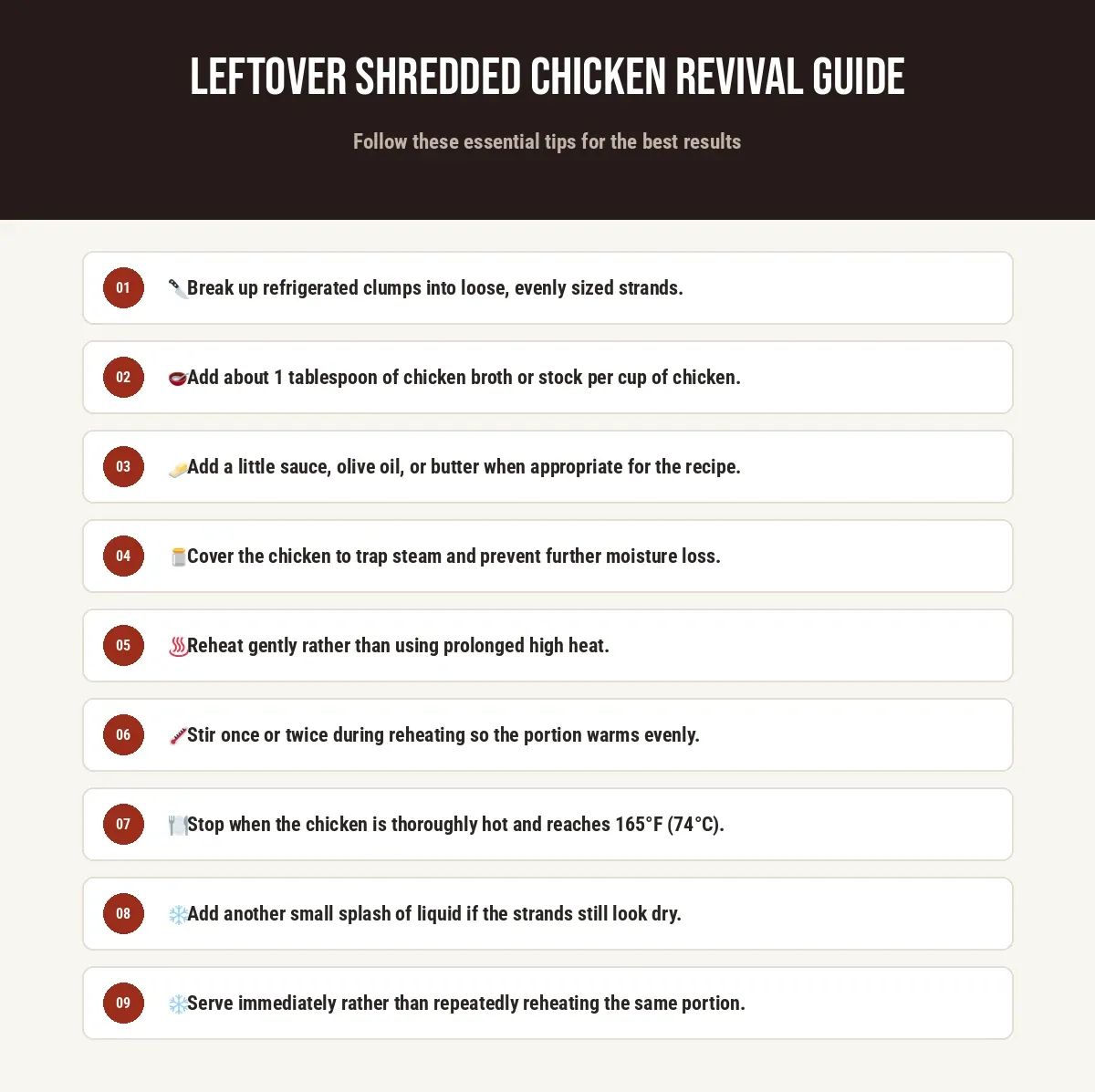
Leftover shredded chicken is easy to rescue if you treat it as already-cooked meat rather than something that needs to be “cooked again”. The main problem after refrigeration is moisture loss. Reheating can make that problem worse, especially when small strands of chicken are exposed directly to high, dry heat. The goal is to restore moisture, heat the chicken evenly, and stop as soon as it is hot enough to serve.
The most reliable approach is simple: loosen the chicken, add a small amount of flavorful liquid, cover it, and reheat gently. Broth works especially well because it adds moisture without making the meat taste watery. A little cooking fat can also help coat the fibers and improve the perception of tenderness.
Why Leftover Shredded Chicken Loses Its Texture?
Shredded chicken loses its tenderness primarily because its muscle proteins have already been cooked and tightened. During the original cooking process, proteins such as myosin and actin denature and contract, squeezing water out of the muscle structure. Refrigeration does not reverse that change. When the chicken is reheated, additional heat can cause the proteins to contract further and drive out more of the remaining moisture.
Shredding makes the problem more noticeable. Instead of one relatively protected piece of meat, you have many small strands with a large amount of exposed surface area. That exposed surface loses moisture quickly in a dry skillet, oven, or microwave. Breast meat is particularly prone to becoming dry because it contains less fat and connective tissue than dark meat.
Cold storage can also make the chicken feel firmer because its rendered fat and gelatin become solid as they cool. This does not necessarily mean the chicken has spoiled. It means its texture has changed. Gentle reheating melts those fats and softens the gelatin, while added liquid replaces some of the moisture lost during cooking and storage.
High heat is therefore the enemy. A microwave run too long, an uncovered skillet over high heat, or prolonged oven reheating can take chicken from tender to stringy within minutes. Gentle, covered heating gives the meat a chance to warm through without aggressively evaporating its remaining moisture.
Step-by-Step Revival: A 3-step Guide
Step 1: Prep
Take only the amount you plan to eat from the refrigerator. Separate large clumps with your fingers or two forks so the chicken forms loose, even strands. Do not leave one dense refrigerated mass in the pan or microwave; the outside will overheat before the center becomes hot.
Remove excess solidified fat or gelatin only if the recipe requires it. Otherwise, leave flavorful juices attached to the chicken. If the chicken is extremely dry, lightly toss the strands before heating so the added liquid can contact more of the surface.
For larger portions, divide the chicken into an even layer rather than creating a thick pile. More uniform thickness means more uniform heating and fewer dried-out edges.
Step 2: Moisture
Add chicken broth or stock as the primary moisture source. Start with about 1 tablespoon per cup of shredded chicken and increase gradually if the meat is exceptionally dry. You want the chicken lightly moistened, not submerged.
For richer preparations, add a small amount of olive oil, melted butter, or the sauce that will accompany the finished dish. For tacos, enchiladas, sandwiches, or rice bowls, use the recipe’s sauce instead of plain broth when possible. A small amount of concentrated liquid gives the meat moisture while reinforcing its final flavor.
Cover the chicken during heating. A lid on a skillet traps steam; a microwave-safe cover performs the same function in the microwave. The trapped moisture condenses back onto the chicken instead of escaping into the air.
Step 3: Heat
Use gentle, covered heat and stop as soon as the chicken is thoroughly hot. On the stovetop, place the moistened chicken in a covered skillet over low to medium-low heat and stir once or twice. In the microwave, cover the portion and heat in short intervals, stirring between intervals to redistribute hot and cool areas. For larger quantities, a covered oven-safe dish works well at a moderate oven temperature.
The ideal chicken should feel hot throughout and remain visibly moist, with the strands separating easily rather than becoming stiff or brittle. If liquid is bubbling aggressively, the pan is too hot. If the edges are drying while the center is still cool, the portion is too thick or the heating is too aggressive. For food-safety purposes, reheated leftovers should reach 165°F (74°C) internally.
| Reheating method | Approx. setting | 1 serving | 2-4 servings | Best instructions |
|---|---|---|---|---|
| Covered skillet | Low to medium-low | 3-5 min | 5-8 min | Add about 1 tbsp broth per cup of chicken, cover, stir occasionally, and stop when steaming hot. |
| Microwave | Medium-high power | 60-90 sec total | 2-4 min total | Cover, heat in 30-45-second intervals, stir between intervals, and add another splash of broth if needed. |
| Oven | 300°F / 150°C | 10-15 min | 15-25 min | Place chicken in a covered baking dish with broth or sauce. Heat until thoroughly hot. |
| Steaming | Gentle steam | 3-5 min | 5-8 min | Put chicken in a heatproof dish, add a little broth, cover, and expose it to gentle steam until hot. |
For most everyday portions, the covered skillet gives the best balance of speed and texture. The microwave is fastest but requires short heating intervals. The oven is useful for larger quantities, particularly when the chicken is already mixed with sauce.
3 Simple Culinary Ideas To Repurpose Leftover Shredded Chicken
Tacos And Quesadillas
Toss the chicken with a little broth, salsa, or enchilada sauce before reheating. Once hot, use it as a filling for tortillas with beans, corn, vegetables, cheese, or other toppings. For quesadillas, keep the chicken layer relatively thin so the tortilla crisps before the filling becomes overheated.
Chicken Fried Rice
Use chilled cooked rice and add the shredded chicken near the end of cooking. Stir-frying the chicken for too long will dry it out, so let the vegetables and rice develop their texture first, then fold in the chicken with a splash of soy sauce, broth, or another sauce.
Chicken Soup Or Noodle Bowls
Add the chicken near the end of simmering rather than boiling it for a long period. The surrounding broth supplies moisture while the chicken only needs enough time to become hot. This is particularly effective for dry breast meat because the broth becomes part of the finished bite rather than simply evaporating from the meat.
Processing Shredded Breast Meat Vs. Dark Meat Strips
Breast meat needs more protection from dry heat because it is relatively lean. Use slightly more broth or sauce, keep the pan covered, and use shorter heating intervals. If the breast meat has already become dry, mixing it with a sauce, soup, curry, enchilada sauce, or another moist preparation is usually more effective than trying to make the meat itself tender again through prolonged reheating.
Dark meat generally tolerates reheating better because it contains more fat and connective tissue. Its richer structure helps it remain moist, although it can still become dry if repeatedly heated. Keep dark meat in slightly larger strips when possible, add a modest amount of liquid, and avoid prolonged high-temperature cooking.
The distinction matters when repurposing the chicken. Dry breast meat works especially well in saucy dishes where moisture becomes part of the recipe. Dark meat can handle preparations such as skillet dishes, rice bowls, wraps, and stir-fries with somewhat less added liquid.
Food Safety
-
Cooling time: Refrigerate cooked chicken within 2 hours of cooking or serving, or within 1 hour if the surrounding temperature is above 90°F (32°C). Divide a large quantity into shallow containers so it cools quickly rather than leaving a deep, hot container to cool slowly.
-
Airtight storage: Store the chicken in a clean, airtight container or tightly sealed food-storage bag. Remove unnecessary excess air, but do not pack the container so tightly that the chicken cannot cool efficiently. Keep the refrigerator at 40°F (4°C) or below.
-
Safe fridge days: Use refrigerated cooked chicken within 3-4 days. Reheat only the portion you intend to eat. If the chicken has been refrigerated longer than that, or if it was left at room temperature beyond the safe cooling window, discard it rather than relying on reheating to make it safe.