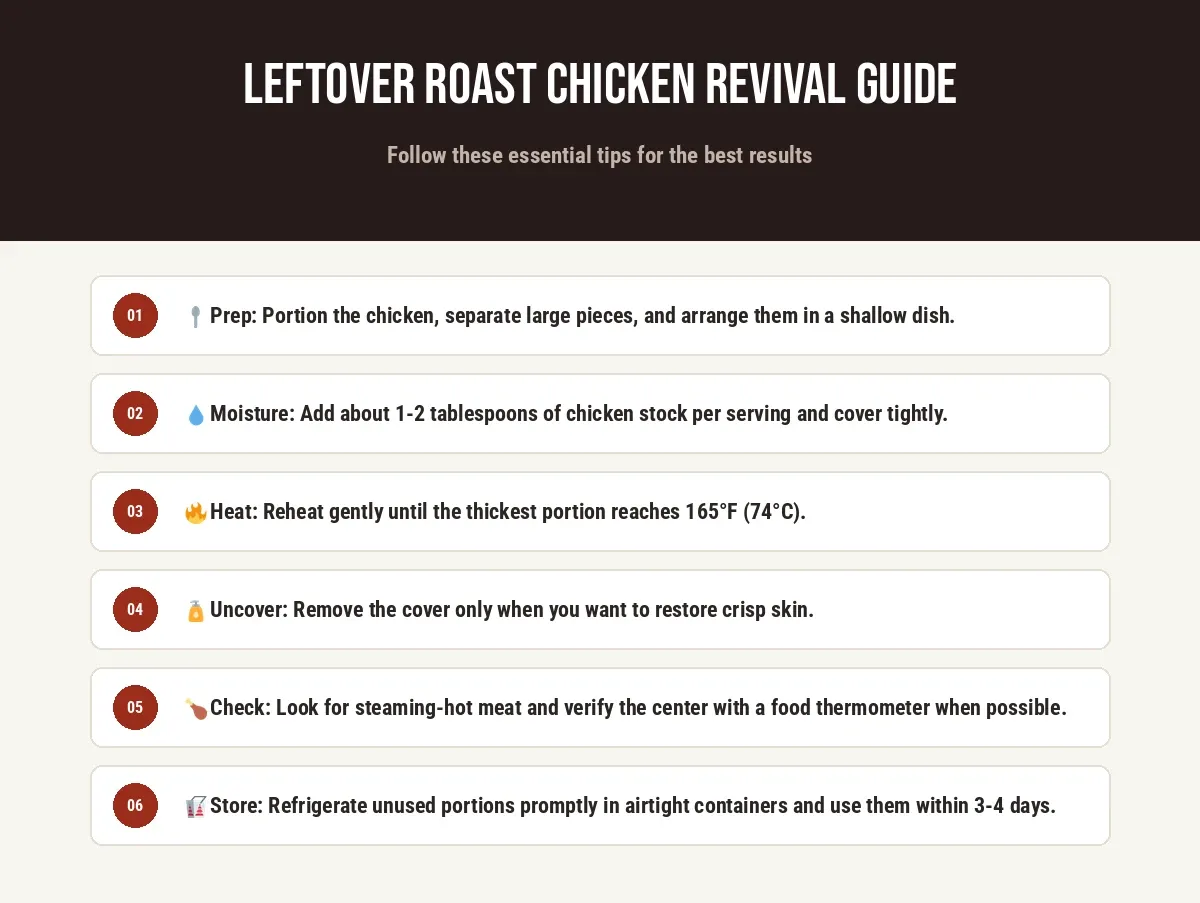
Leftover roast chicken is one of the easiest foods to waste because reheating can turn juicy meat dry, stringy, or rubbery. The fix is not simply “heat it less”. Roast chicken needs controlled moisture, gentle reheating, and enough time for the center to warm without repeatedly cooking the already-cooked meat.
Treat different parts differently. Breast meat is lean and dries quickly. Thighs and drumsticks contain more fat and connective tissue, so they tolerate reheating better. Skin needs dry, direct heat if you want it crisp; covering it with steam protects the meat but makes the skin soft. The most effective approach is therefore to add moisture around the meat, keep it covered during most of the reheating, and crisp exposed skin only at the end.
Why Leftover Roast Chicken Loses Its Texture?
Freshly roasted chicken contains water held within a network of muscle proteins. During the original cooking process, heat causes those proteins to tighten and change structure. Refrigeration then makes the cooked meat firmer, while reheating causes the muscle proteins to contract further and squeeze out more moisture.
That is why leftover chicken can taste dry even when it has not been overcooked a second time. The meat has already undergone the major structural changes caused by cooking, so prolonged or aggressive reheating gives you little benefit and increases moisture loss. Lean breast meat is particularly vulnerable because it contains less fat and connective tissue to buffer the effect.
Refrigeration also changes the texture of the surface. Chicken skin loses its crispness as moisture migrates into and around it. If you microwave the chicken uncovered, the surface can become chewy while the interior heats unevenly. If you cover it tightly with liquid, the meat stays more succulent but the skin becomes soft.
The practical target is therefore different from cooking raw chicken: you are reheating an already-cooked product, not trying to cook it again. Warm the center to a safe temperature as quickly and gently as practical, use a small amount of added moisture, and expose the skin to dry heat only when crispness matters.
Step-by-Step Revival: A 3-step Guide
Step 1: Prep
Remove the chicken from the refrigerator and portion it according to size. Separate large pieces rather than reheating the entire bird at once. For breast meat, slice thick pieces across the grain or leave a large breast whole if you want to retain more moisture. For thighs and drumsticks, keep the pieces intact.
If the chicken has been refrigerated with congealed juices or gravy, scrape away only excessive solid fat; leave flavorful juices attached. Place the pieces in a single layer in a shallow heatproof dish. For skin that you intend to crisp, keep the skin facing upward and uncovered during the final stage of heating.
Step 2: Moisture
Add chicken stock or low-sodium chicken broth to the dish. Use roughly 1-2 tablespoons per serving rather than submerging the meat. A teaspoon of butter or olive oil can also be dotted over very lean breast meat, but the stock is the key moisture source.
Cover the dish tightly with foil or a lid. The trapped steam raises the humidity around the chicken and slows surface moisture loss. If you are reheating sliced chicken for sandwiches, wraps, rice, or pasta, toss the slices directly with a small amount of warm stock or sauce before heating.
Step 3: Heat
Use gentle, even heat. In an oven, cover the chicken and warm it at about 325°F (165°C) until the thickest portion reaches 165°F (74°C). A covered skillet over low to medium-low heat works well for smaller pieces: add the stock, cover, and turn the chicken once.
For microwave reheating, use medium power rather than maximum power. Heat in short intervals and turn or rearrange the pieces between intervals. The chicken should be steaming hot throughout, with no cool center. If using a thermometer, check the thickest part without touching the bone.
For crisp skin, uncover the chicken after the meat is hot and finish it briefly under a broiler or in a hot oven. The skin is ready when it feels crisp and the fat has rendered rather than looking pale and damp.
| Reheating method | Typical time | Temperature/setting | Best portion size | Instructions |
|---|---|---|---|---|
| Oven, covered | 15-25 min | 325°F / 165°C | 2-6 pieces | Add 1-2 tbsp stock per serving, cover tightly, and heat until the center reaches 165°F. Uncover briefly to crisp skin. |
| Skillet, covered | 8-15 min | Low to medium-low | 1-4 pieces | Add a splash of stock, place chicken skin-side up, cover, and heat gently. Turn once if necessary. |
| Microwave | 1-3 min total, depending on portion | 50-70% power | 1-2 servings | Add stock, cover loosely, heat in short intervals, rearrange between intervals, and check the center. |
| Air fryer | 4-8 min | About 325-350°F / 165-175°C | 1-3 pieces | Best for restoring skin crispness. Add moisture first if the meat is lean, then heat until 165°F internally. |
| Whole chicken | 25-40+ min | 325°F / 165°C | 1 whole bird | Keep covered with a little stock in the dish. Check the thickest meat in several places before serving. |
3 Simple Culinary Ideas To Repurpose Leftover Roast Chicken
Chicken Tacos
Pull the meat into bite-sized pieces and warm it in a skillet with a splash of chicken stock. Add cumin, smoked paprika, garlic, or a mild salsa, then spoon the hot chicken into tortillas. Use crisp leftover skin as a topping by reheating it separately in a dry skillet or oven until crisp. This works especially well with mixed dark and white meat because the sauce prevents lean pieces from drying out.
Quick Chicken Noodle Soup
Turn the bones, skin, pan juices, and scraps into a quick broth if they have been safely refrigerated. Strain the liquid, add vegetables and noodles, then add shredded leftover chicken near the end rather than boiling it for a long time. The chicken only needs to heat through; prolonged simmering will make already-cooked meat tougher and stringier.
Chicken Pot Pie Filling
Combine chopped chicken with cooked vegetables and a thick sauce made from chicken stock, milk, and a little flour or butter. Put the mixture under pastry or biscuits and bake until the topping is deeply browned and the filling is bubbling. This is particularly useful for dry breast meat because the creamy filling supplies the moisture the meat lost during its first cooking.
Handling Whole Leftover Bird Pieces And Chicken Skin
A whole leftover chicken is harder to reheat evenly than individual portions. The exterior can become dry before the meat near the bone is hot, so divide the bird into breasts, thighs, drumsticks, and wings when practical. Store the pieces separately in shallow containers, especially if you expect to reuse them in different dishes.
For the juiciest breast meat, keep the breast whole until you know how you will use it. Slice it immediately before reheating rather than several days earlier. Smaller pieces have more exposed surface area and lose moisture faster.
Chicken skin needs a separate strategy. Moist heat makes it softer, while dry heat makes it crisp. If the skin matters, reheat the meat covered with stock first, then remove the cover and finish the chicken under a broiler, in a hot oven, or in an air fryer. Patting excess surface moisture away before the final crisping stage helps the skin brown instead of steam.
Do not throw away small scraps. Pick meat from the bones for sandwiches, fried rice, soup, pasta, quesadillas, salads, or stock. Freeze usable bones and skin if you will not make stock within the safe refrigerated storage period.
Food Safety
-
Cooling time: Refrigerate cooked chicken within 2 hours of cooking or serving. If the surrounding temperature is above 90°F (32°C), refrigerate it within 1 hour. Divide a large bird into smaller portions and use shallow containers so it cools more quickly.
-
Airtight storage: Store chicken in airtight containers or tightly wrapped packaging to limit moisture loss, odors, and contamination. Keep the refrigerator at 40°F (4°C) or below.
-
Safe fridge days: Use refrigerated cooked chicken within 3-4 days. When reheating, bring the thickest portion to 165°F (74°C). Freeze portions that will not be eaten within that window rather than extending refrigerator storage.