The Best Ways to Use Up Leftover Thanksgiving Turkey
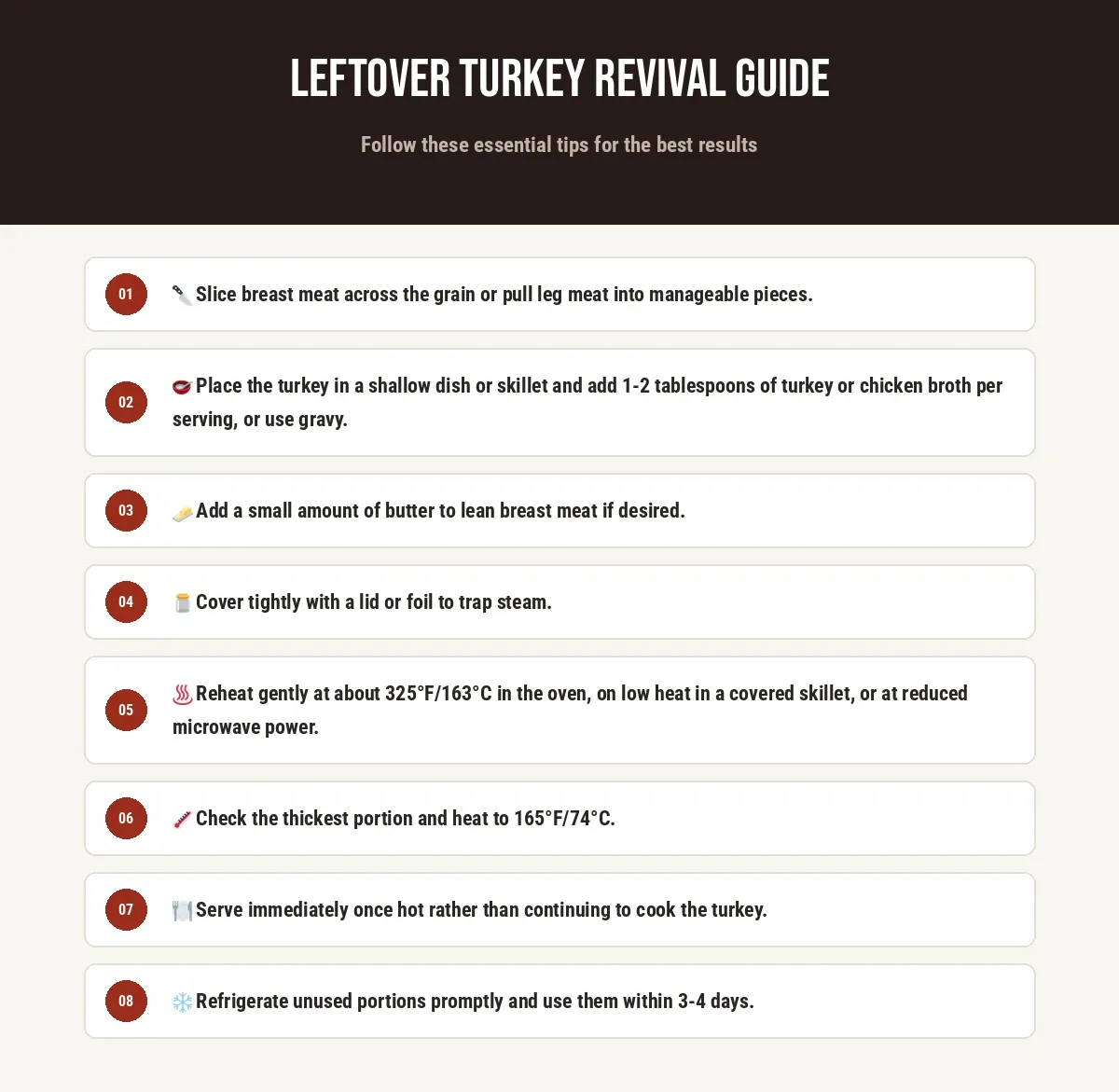
Leftover turkey is easy to waste because reheating can turn tender meat dry, stringy, and chewy. The fix is not simply “heat it less”. Turkey needs controlled reheating with added moisture, moderate heat, and as little exposure to hot air as possible. Slice or pull only the amount you plan to eat, add a small amount of broth or gravy, cover it, and heat until just hot throughout. Keep breast meat and whole leg meat in mind as separate ingredients: breast meat is leaner and dries faster, while leg meat contains more connective tissue and benefits from moist, slower reheating.
Why Leftover Turkey Loses Its Texture?
Turkey loses tenderness mainly because reheating drives water out of its muscle fibers. During the original cooking process, turkey proteins such as myosin and actin tighten and release moisture. Refrigeration then firms the meat further. When cold turkey is exposed to high heat for too long, those proteins contract again, squeezing out additional water. The result is dry, firm meat rather than the juicy texture it had when freshly cooked.
Breast meat is especially vulnerable because it contains relatively little fat and connective tissue. Once its moisture is lost, there is little internal fat or gelatin to compensate. Whole turkey legs behave differently. They contain more connective tissue and dark meat, so gentle reheating with moisture can soften them and make them more tender. Aggressive dry heat, however, can still make the exterior tough while leaving the interior unevenly heated.
The refrigerator also changes the eating quality of cooked meat. As turkey cools, its fats solidify and its texture becomes firmer. That is why reheating should focus on restoring moisture and warming the meat evenly rather than cooking it again. The goal is to bring the turkey back to serving temperature, not to brown or recook it.
Step-by-Step Revival: A 3-step Guide
Step 1: Prep
Remove only the portion you intend to eat. Slice turkey breast across the grain into relatively thin pieces, or pull larger pieces of leg meat from the bone. Avoid repeatedly cutting and reheating the entire batch because every reheating cycle exposes more surface area to heat and increases moisture loss.
Arrange the turkey in a shallow, even layer. Separate pieces that are stuck together so heat can reach them uniformly. If you have gravy, place the turkey directly into it. Otherwise, keep the pieces close together in a heat-safe dish so they retain moisture instead of spreading them across a large, dry pan.
For a whole turkey leg, leave the meat in larger pieces when possible. Smaller pieces have more exposed surface area and can dry out faster. Remove excess skin only if you do not want it to become soft; otherwise, leaving it attached helps protect the meat during moist reheating.
Step 2: Moisture
Use low-sodium chicken or turkey broth as the primary added liquid. Add about 1-2 tablespoons per serving for sliced breast meat, or enough to lightly coat the bottom of the dish without submerging the turkey. Gravy works even better when available because it supplies both moisture and fat.
For breast meat, a teaspoon of melted butter per serving can add richness and help compensate for the meat’s low fat content. For pulled or chopped turkey, toss the meat with broth or gravy before heating so the liquid reaches more of the surface.
Cover the dish tightly with a lid or foil. The trapped steam prevents the turkey’s surface from drying while the added broth or gravy creates a humid environment. Do not pour large amounts of liquid over the meat; the goal is moist reheating, not boiling.
Step 3: Heat
For most leftover turkey, the best method is covered oven reheating at about 325°F (163°C) or gentle stovetop reheating over low heat. Heat until the thickest portion reaches 165°F (74°C), measured with a food thermometer. The turkey should be hot and tender rather than aggressively sizzling. If the edges are drying, the pan is bubbling hard, or the meat feels noticeably firmer, the heat is too intense or the turkey has been heated too long.
For sliced breast meat, check early because thin pieces heat quickly. For a whole leg or large portion, allow more time and keep it covered. If using a microwave, use medium power in short intervals and turn or rearrange the turkey between intervals so the edges do not overcook before the center is hot.
| Reheating method | Typical setting | Approx. time | Small portion | Large portion | Best instructions |
|---|---|---|---|---|---|
| Covered oven | 325°F / 163°C | 15-30 min | 10-15 min | 20-30 min | Add broth or gravy, cover tightly, and heat until 165°F/74°C |
| Covered skillet | Low heat | 8-15 min | 5-8 min | 10-15 min | Add 1-2 tbsp broth or gravy, cover, and turn pieces occasionally |
| Microwave | 50-70% power | 1-4 min | 30-60 sec intervals | 1-2 min intervals | Add broth, cover loosely with a microwave-safe cover, rotate between intervals |
| Air fryer | 300-325°F / 149-163°C | 5-10 min | 4-6 min | 7-10 min | Use only for pieces that benefit from surface crisping; lightly coat with fat and avoid overheating |
Times are approximate because turkey thickness, starting temperature, and equipment vary. Use 165°F (74°C) as the food-safety endpoint rather than relying on time alone.
3 Simple Culinary Ideas To Repurpose Leftover Turkey
Turkey And Gravy Pot Pie
Chop leftover turkey and combine it with gravy, peas, carrots, and a small amount of broth if the mixture is too thick. Spoon it into a baking dish, cover with puff pastry or pie dough, and bake until the filling is bubbling and the crust is fully browned. This works particularly well for breast meat because the gravy supplies the moisture that reheated lean turkey lacks.
Crispy Turkey Tacos
Shred turkey leg meat and toss it with a little broth, then heat it in a skillet until the liquid evaporates and the edges become lightly crisp. Fill tortillas with the turkey and add shredded lettuce, tomatoes, avocado, or another fresh topping. The combination of moist interior and crisp edges gives leftover dark meat a completely different texture.
Turkey Noodle Soup
Add chopped turkey to chicken or turkey broth with noodles, carrots, celery, and herbs. Cook the vegetables and noodles first, then add the already-cooked turkey near the end. Warm it through without simmering the turkey for a long period. This is particularly useful for dry breast meat because the broth provides moisture while the short heating time limits additional protein tightening.
Thanksgiving Leftover Turkey (Breast Meat Vs. Whole Turkey Legs)
Breast meat: Treat it as a lean, moisture-sensitive ingredient. Slice it across the grain, add broth or gravy, cover it, and reheat gently. Thin slices work especially well in sandwiches, soup, pot pie, casseroles, and gravy-based dishes. Avoid repeatedly reheating the same container because breast meat becomes progressively drier with each heating cycle.
Whole turkey legs: Treat them as a tougher, more connective-tissue-rich cut. Keep the meat in larger pieces when reheating and use a covered, moist environment such as broth, gravy, or a covered baking dish. Pulled leg meat is particularly useful for tacos, sandwiches, soups, rice dishes, and stews because its richer texture tolerates saucier preparations.
Food Safety
-
Cool promptly: Refrigerate leftover turkey within 2 hours of cooking or serving; if the surrounding temperature is above 90°F (32°C), refrigerate it within 1 hour. Divide a large quantity into shallow containers so it cools more quickly rather than leaving a deep, hot container on the counter.
-
Store airtight: Use shallow, airtight containers or tightly wrapped portions. Keep the refrigerator at 40°F (4°C) or below. Store turkey separately from foods that will be eaten without further cooking to reduce cross-contamination.
-
Use within 3-4 days: Cooked turkey should generally be eaten within 3-4 days when refrigerated at 40°F/4°C or below. Reheat leftovers to 165°F (74°C) before eating. Freeze portions that will not be used within that window rather than repeatedly reheating and refrigerating them.