The Best Ways to Reheat Roasted and Fried Potatoes
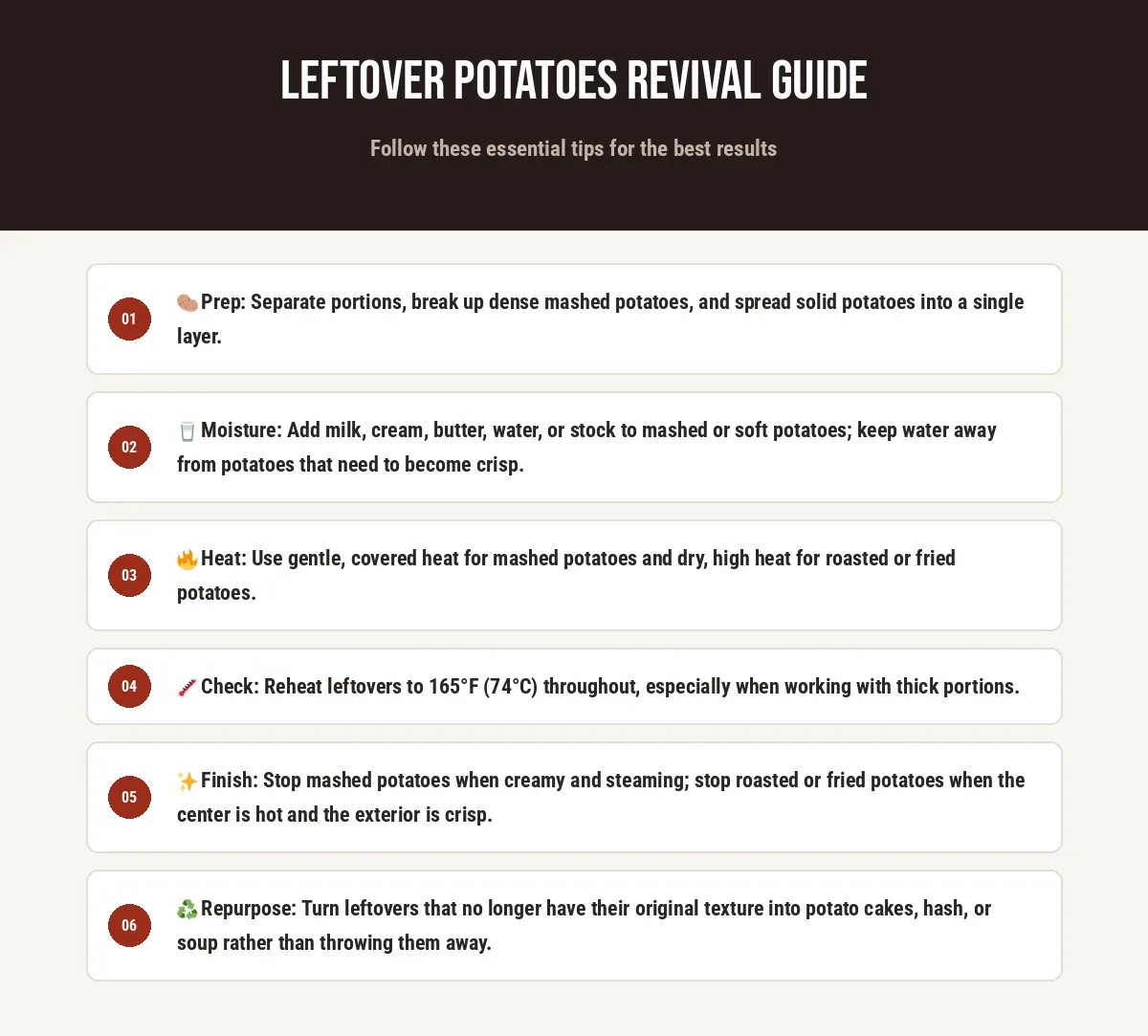
Leftover potatoes are worth saving, but they rarely taste as good after refrigeration. The problem is not that the potato has suddenly gone bad. Cooking has already changed its starch structure, and chilling changes it again. The right reheating method depends on whether the potatoes are mashed, boiled, roasted, or fried.
The goal is simple: restore moisture where the potato has dried out, loosen starch that has firmed up, and use enough heat to make the center hot without turning the outside gummy. Avoid automatically reaching for the microwave at full power. Fast, aggressive heating can produce uneven results, especially when potatoes have been refrigerated in a dense container.
Why Leftover Potatoes Loses Its Texture?
Potatoes are rich in starch granules surrounded by water. During cooking, heat causes those granules to absorb water and swell in a process called gelatinization. That is what turns a firm raw potato into a soft cooked one.
Once cooked potatoes cool, some of their starch molecules begin rearranging and forming more ordered structures again. This process, called starch retrogradation, makes refrigerated potatoes feel firmer, drier, or slightly waxy. Water also migrates within the potato and can separate from the starch matrix. Mashed potatoes may become dense and stiff, while roasted potatoes lose their crisp exterior as moisture moves from the interior toward the surface.
Reheating can soften the starch again, but simply adding more heat does not replace lost moisture. A microwave can also heat water unevenly, leaving one section steaming hot and another cold. For mashed potatoes, added dairy or another suitable liquid helps rebuild the creamy texture. For roasted or fried potatoes, adding water is counterproductive because it prevents the surface from becoming crisp.
The key distinction is texture. Soft potatoes need controlled moisture; crisp potatoes need moisture removed from the surface.
Step-by-Step Revival: A 3-step Guide
Step 1: Prep
Take the potatoes from the refrigerator and prepare them according to their form. Break mashed potatoes into smaller portions so the cold center is not trapped inside one large mass. Separate roasted potato pieces rather than reheating them in a crowded pile. Spread fries or tater tots into a single layer so hot air or direct pan heat can reach their surfaces.
For mashed or boiled potatoes, remove any obviously dried or crusted edges if they have hardened substantially. For roasted and fried potatoes, pat away visible surface moisture with a clean paper towel. Do not rinse cooked potatoes before reheating; that adds unnecessary water and weakens the texture.
Step 2: Moisture
For mashed potatoes, add a small amount of whole milk, half-and-half, cream, or unsalted butter. Start with about 1 tablespoon of liquid or butter per cup of mashed potatoes and add more only if needed. The exact amount depends on how dry the potatoes became in storage.
For plain boiled potatoes, use a covered pan with a tablespoon or two of water or stock to create gentle steam, or toss the potatoes with a little butter or olive oil after heating.
For roasted potatoes, fries, and tater tots, do not add water. Their problem is usually loss of crispness rather than insufficient internal moisture. A light coating of oil can help the exterior brown again, but excess oil makes them greasy.
Step 3: Heat
For mashed potatoes, heat gently in a covered saucepan over low to medium-low heat, stirring frequently. Stop when the potatoes are steaming hot and smooth rather than allowing them to bubble aggressively. If using a microwave, heat in short intervals and stir between each one so the temperature and moisture redistribute evenly.
For roasted potatoes, fries, and tater tots, use an oven, toaster oven, skillet, or air fryer. High, dry heat is the priority. The potatoes are ready when the centers are hot and the surfaces feel crisp when tapped or bitten. If they remain pale and soft, they need more surface heat rather than more moisture.
For food-safety purposes, reheated leftovers should reach 165°F (74°C) throughout. A food thermometer is the most reliable way to check the center, particularly with thick portions.
| Reheating method | Typical setting | Approx. time | Best portion size | Instructions |
|---|---|---|---|---|
| Microwave | High power, covered | 1-3 min | 1-2 cups mashed or boiled potatoes | Add a little milk, cream, butter, water, or stock as appropriate. Heat in 30-60 second intervals, stirring between intervals. |
| Stovetop | Low to medium-low | 5-10 min | 1-4 cups mashed potatoes | Add liquid or butter, cover, and stir frequently. Add another small splash if the potatoes become stiff. |
| Oven | 375°F / 190°C | 10-20 min | 2-6 cups roasted or boiled potatoes | Spread potatoes in a shallow layer. Cover softer potatoes to retain moisture; leave roasted potatoes uncovered for browning. |
| Skillet | Medium heat | 6-12 min | 1-3 cups roasted potatoes or fries | Add a small amount of oil or butter. Spread into one layer and turn periodically for even browning. |
| Air fryer | 375-400°F / 190-205°C | 4-10 min | 1-3 cups fries, tots, or roasted potatoes | Arrange in a single layer. Shake or turn halfway through. No added water. |
| Toaster oven | 375-400°F / 190-205°C | 8-15 min | 1-3 cups roasted potatoes | Use a shallow tray and avoid crowding. Heat until the center is hot and the exterior is crisp. |
Times vary with potato size, starting temperature, appliance power, and portion depth. Thick or tightly packed portions take longer than a single layer.
3 Simple Culinary Ideas To Repurpose Leftover Potatoes
Crispy Potato Hash
Cut leftover boiled or roasted potatoes into bite-size pieces and cook them in a lightly oiled skillet over medium-high heat. Add chopped onion, bell pepper, corn, leftover vegetables, or cooked beans. Leave the potatoes undisturbed for several minutes at a time so they develop a browned crust. Season near the end with salt, black pepper, garlic, paprika, or fresh herbs. Serve as a breakfast side or turn it into a complete meal with a cooked egg or another protein.
Cheesy Potato Cakes
Mash cold leftover potatoes with a little grated cheese and enough flour or breadcrumbs to make a mixture that holds together. Form small, thick patties and chill them briefly if they feel soft. Pan-fry in a thin layer of oil until both sides are browned and the centers are hot. This works especially well for plain mashed potatoes that have become too stiff to serve attractively.
Potato Soup Thickener
Blend leftover cooked potatoes into vegetable, chicken, or bean soup to add body without relying on cream. Start with a small amount and blend until the desired thickness is reached. For a chunkier soup, dice the potatoes and add them near the end of cooking so they warm through without disintegrating. This is particularly useful when you have several different leftover vegetables that need to be used together.
Re-Crisping Roasted Sweet Potatoes, Tater Tots, And Fries
Roasted sweet potatoes, tater tots, and fries need a different strategy from mashed potatoes. Their desirable texture comes from contrast: a browned, relatively dry exterior surrounding a soft interior. Refrigeration introduces moisture to the surface, while the starch firms as it cools. Microwaving them tends to make that surface soft rather than crisp.
Spread the pieces in a single layer with space between them. An air fryer at 375-400°F (190-205°C) is particularly effective because circulating hot air rapidly dries the surface. An oven or toaster oven at the same temperature also works. A skillet is useful for smaller amounts; heat a thin film of oil over medium heat and turn the pieces regularly.
Do not cover the potatoes during this process, and do not add water or stock. For fries and tater tots, a small amount of oil can improve browning if the surface looks dry, but they generally need less oil than people expect. Sweet potatoes contain more natural sugar, so watch them closely near the end because their surface can brown quickly.
Food Safety
-
Cool promptly: Refrigerate cooked potatoes within 2 hours of cooking or serving. If the surrounding temperature is above 90°F (32°C), refrigerate them within 1 hour. Divide a large quantity into shallow containers so it cools more quickly rather than leaving a deep, hot mass on the counter.
-
Store airtight: Transfer potatoes to clean, airtight containers or tightly sealed storage bags and refrigerate at 40°F (4°C) or below. Keeping air out reduces drying and limits exposure to other foods and odors, although airtight storage does not extend the safe storage period indefinitely.
-
Use within 3-4 days: USDA guidance recommends using refrigerated cooked leftovers within 3-4 days. Reheat only the portion you plan to eat, and heat it to 165°F (74°C). If the potatoes have been refrigerated longer than the recommended period, discard them rather than relying on smell or appearance to judge safety.