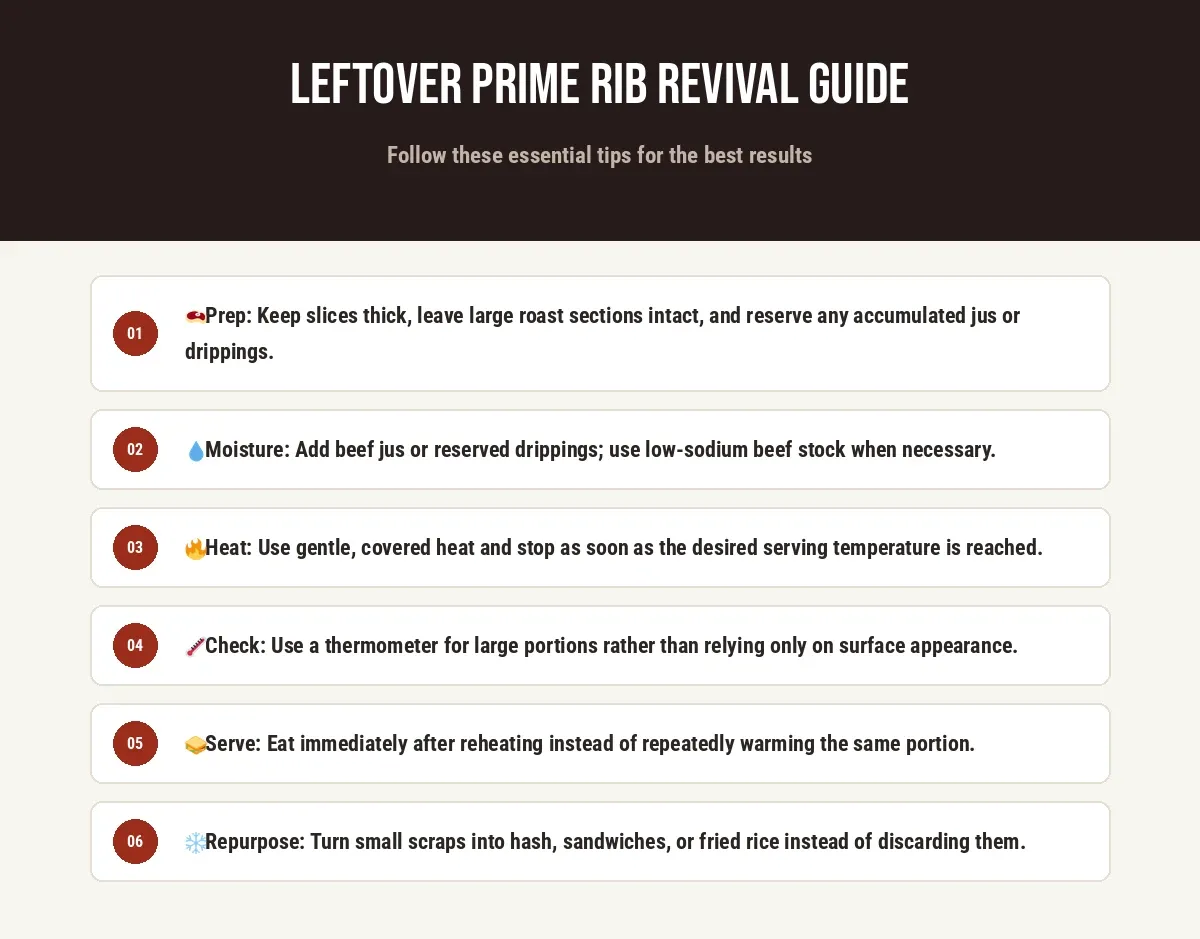
Leftover prime rib is worth treating gently. The roast has already been cooked to a precise internal temperature, so reheating it is not really a second cooking process; it is a temperature-restoration process. The goal is to warm the meat through without pushing its muscle proteins far enough that they tighten and squeeze out more moisture. Thick slices, large roast sections, and boneless pieces all respond differently, but the same principle applies: use gentle heat, add controlled moisture, and stop as soon as the center is warm.
The best approach depends on how the prime rib was originally stored and how much you have left. A whole standing-rib section can be warmed gradually in the oven, while individual slices can be revived quickly with a covered pan, a low oven, or a gentle water bath. Avoid treating refrigerated prime rib like raw meat that needs prolonged cooking. It has already reached its finished texture once.
Why Leftover Prime Rib Loses Its Texture?
Prime rib loses tenderness during reheating mainly because its muscle proteins continue to contract as their temperature rises. During the original roast, proteins such as myosin and actin change structure and squeeze some of the water held within the muscle fibers. After chilling, reheating causes additional protein contraction and moisture migration. If the meat is heated too aggressively, more liquid is forced out, leaving the outer layers dry and the center progressively firmer.
Chilling also changes how the fat behaves. The marbled fat that helped lubricate the meat becomes firm and waxy in the refrigerator. Gentle reheating allows that fat to soften gradually. High heat can instead brown and dry the exterior before the interior has warmed properly.
The cut matters as well. Prime rib contains substantial intramuscular fat and connective tissue, which contribute to its rich, tender texture when properly cooked. Reheating does not recreate the original roast because the meat’s internal moisture has already been redistributed during cooling. The practical target is therefore not "cook it again," but "warm it slowly enough to minimize additional moisture loss."
Step-by-Step Revival: A 3-step Guide
Step 1: Prep
Remove the prime rib from the refrigerator and divide it according to how you plan to serve it. For individual portions, keep slices relatively thick rather than cutting them into thin strips before heating; more surface area means more opportunity for moisture to escape. Trim only obviously unwanted exterior fat after reheating if possible, since the fat cap can help shield the meat during warming.
Pat excessive surface moisture dry with a paper towel, but do not press or squeeze the meat. Place slices in a single layer so they heat evenly. For a larger roast section, leave it intact. If the piece has been stored with its jus or drippings, reserve that liquid rather than discarding it.
Step 2: Moisture
Use beef jus or reserved prime-rib drippings as the first choice for restoring moisture. If those are unavailable, a small amount of low-sodium beef stock works. The liquid should provide a humid environment rather than submerge the meat.
For sliced prime rib, add a few tablespoons of jus or stock to the bottom of a covered skillet or baking dish, keeping the liquid mostly underneath the meat. A small amount of butter can also help with richness, but liquid beef jus is more useful for maintaining the meat’s moist environment. Cover tightly with a lid or foil so steam stays contained.
Step 3: Heat
Use low, controlled heat. For sliced prime rib, a covered skillet over low heat or a low oven around 250°F (120°C) works well. Warm until the center is heated to your desired serving temperature rather than leaving the meat over heat for a fixed long period. The meat should feel warm and supple when pressed gently, with softened fat and no cool center.
For a larger roast section, use the oven at approximately 250°F (120°C) with a covered roasting dish and a small amount of jus. A thermometer is the most reliable way to judge the center. For reheating already-cooked beef, USDA guidance recommends reheating leftovers to 165°F (74°C) for food-safety purposes, although that temperature can make prime rib considerably more cooked than its original doneness. If preserving a rare or medium-rare texture is the priority, the safest approach is to reheat only properly refrigerated leftovers and recognize that a lower serving temperature does not provide the same pathogen-reduction step as reheating to 165°F.
| Reheating method | Typical time | Setting | Best portion | Instructions |
|---|---|---|---|---|
| Covered skillet | 5-10 minutes | Low heat | 1-4 slices | Add a few tablespoons of jus or stock, place slices in one layer, cover, and turn once if needed. |
| Low oven | 15-30 minutes | 250°F / 120°C | 4-8 slices | Arrange in a covered dish with jus or stock. Heat gently until the center is warm. |
| Low oven, large roast | 30-60+ minutes | 250°F / 120°C | Standing-rib section | Keep the roast intact, add jus, cover tightly, and use an internal thermometer to monitor the center. |
| Gentle water bath | 20-40 minutes | About 130-140°F / 54-60°C | Sealed individual portions | Place properly sealed portions in a controlled-temperature bath and warm gradually. This method requires careful temperature control and appropriate food-safety handling. |
| Microwave | 30-90 seconds at a time | 30-50% power | 1-2 slices | Add jus, cover loosely, heat in short intervals, and stop frequently. Full power is more likely to create hot, dry edges. |
3 Simple Culinary Ideas To Repurpose Leftover Prime Rib
Prime Rib Hash
Dice the meat into bite-size pieces and combine it with already-cooked potatoes, onions, and peppers. Crisp the vegetables first, then add the prime rib near the end so it warms without prolonged cooking. Finish with a fried egg or a spoonful of horseradish cream. This is especially useful for small scraps that are too irregular for attractive slices.
French Dip-Style Sandwich
Slice the prime rib thinly across the grain and warm it briefly in hot beef jus. Pile it onto a sturdy toasted roll with sautéed onions and a modest amount of provolone or another melting cheese. Serve additional jus alongside for dipping. Keep the meat’s exposure to direct heat short; the hot jus provides most of the reheating.
Prime Rib Fried Rice
Cut the beef into small cubes and use it as a finishing ingredient in fried rice. Cook the cold rice, vegetables, aromatics, and sauce first, then fold in the prime rib during the final minute or two. This turns smaller leftover pieces into a complete meal while preventing the beef from spending the entire cooking time in a hot pan.
Managing Thick Slices Vs. Standing Rib Roast Cuts
Thick slices need very little heating time because their relatively small mass allows heat to reach the center quickly. Keep them at least moderately thick, add jus or stock beneath them, cover the pan or dish, and use low heat. For slices intended to remain pink, remove them from direct heat as soon as the center is sufficiently warm because residual heat will continue raising their temperature.
Standing rib roast cuts should generally remain intact during reheating. A large piece has a lower surface-area-to-volume ratio, so it can be warmed slowly without drying as rapidly as thin slices. Place the roast cut in a covered baking dish with a small amount of jus or stock. Use a thermometer inserted into the thickest part to track the center rather than judging doneness from the exterior. Once carved, the meat has considerably more exposed surface area and should be reheated more briefly.
If you have both types, heat the standing-roast portion first and carve it afterward. Reheat individual slices separately when possible. This preserves more moisture than repeatedly reheating and cooling an entire roast.
Food Safety
-
Cooling time: Refrigerate cooked prime rib within 2 hours of cooking or serving. If the surrounding temperature is above 90°F (32°C), refrigerate it within 1 hour. Divide a large roast into smaller portions or shallow containers when necessary so it cools rapidly.
-
Airtight storage: Store prime rib in airtight containers or tightly wrapped packaging, minimizing exposed air. Include cooled jus or drippings when practical to protect the meat from drying and to preserve usable leftovers.
-
Safe fridge days: Properly refrigerated cooked beef should generally be used within 3-4 days. If you will not eat it within that period, freeze it promptly rather than repeatedly reheating and refrigerating it. When reheating leftovers, USDA guidance is to bring them to 165°F (74°C).